Showing posts with label Zen. Show all posts

Sunday, August 2, 2015

Is reality harsh? and other minutia

Cold?

We say, "That's the cold hard truth." It means "That's a truth I don't like. That's part of reality I'd rather put aside." As an elderly lady I know once told her daughter, memorably, "Well, that might be reality, but that doesn't mean I have to think about it."

You don't have to believe that, barring accident, you yourself are aging, and are going to die, and therefore make out an Advance Care Directive. Here's one form.
(This used to be called Living Will, a term that was somehow more approachable, though not logical. It's a record of how you want to be cared for in the event you can't speak for yourself.)
Whether or not you face reality, it just is. To call it cold and harsh is to say you don't like it. Of course not in specific instances. But to dislike the laws of the universe is . . . not Zen.

I just brought this up because someone I know is going around telling friends how she wants them to pull the plug if she's terminally ill, and how to do her funeral (perhaps just keeping her end up in conversation) and you know what? her distant family is going to get to make all those decisions unless she gets it on paper. Signed and witnessed.
~~~~~~~~~~~

Gerard Manley Hopkins
I just returned to "The Windhover." It may be his best poem, and that's saying something, because he may be the best poet of his time.

In reading it, do not overlook the epigraph. Also, this: "my heart in hiding/stirred." My heart in hiding; what a phrase.

Here it is. It is his invented language, so, like contemporary art, it's not something you grasp on sight.

~~~~~~~~~~~

Abstract art.

Just experience it.

Sunday, June 14, 2015

Please do not sit on Buddha


Since things are perfect and complete
just as they are,
beyond good and bad,
without adopting and rejecting,
one just bursts out laughing!

Longchepa (1308-1364)

Sunday, June 7, 2015

Present moment, hummingbird moment

Yesterday I went outside to cut some basil to put with the tomatoes I was bringing to an elderly friend who had a bad fall a few days ago. At the moment I cut it the smell of freshest basil bloomed, just as the sun came out, and I thought, Life is perfect.  You might think that at my age, having practiced Zen for quite a few years, I had thought that before, but I don't think I had. Life is perfect. The sickbed, taxes, the weather. Everything.

As I say, the sun came out. And I may have been softened by some lovely things that have been happening around here. We live in a neighborhood only ten minutes from downtown Columbus, but on a ravine with woods in our back yard.

Two days ago I walked into the living room, and there outside the big window lay two young whitetail deer, munching. Both were bucks with antlers at this stage. We've had deer before, up to five once, but only one buck. Usually it is does and their young.
I moved out of the room. When I looked again a few minutes later, one had left. The other saw me again and lazily got up and left, too. I thought how lucky we are that we don't cultivate that backyard into a shade garden, which it once was. It's fine for the deer to lie on the plants and eat what they like.

Later that day I was sitting with a friend at the kitchen table when motion outside the window caught my eye, and there was a hummingbird drinking from the red petunias in the hanging basket. It darted from blossom to blossom to blossom, then gone. Present moment, hummingbird moment.

As if all that isn't enough, Saturday morning I saw a baby bunny on the front porch, a bunny small enough to hold in the palm of one hand. I just don't know anything more appealing. He fled when he saw me there.
Each sighting ruptured for a moment my usual reality, that habit of going-somewhere, doing-something, the way nature in the city does. I am aided in stopping by Zen practice, of course. I have been reading the remarkable blog of Tracy and Koun Franz, One Continuous Mistake. On a parenting blog, Mothering in the Middle, she talks about the Japanese worldview in contrast to our own carpe diem.  Ichi-go ichi-e means "one time, one meeting." Or, your only chance, right here. 
Our backyard in spring

Tuesday, February 10, 2015

What is Zen practice?

 I don't hold with embarrassing people or dogs (you can't embarrass a cat) so I have modified this quote from a blog, and present it without attribution:

"For me, Zen practice includes not just zazen (sitting meditation) but all of the other aspects of Buddhist practice such as chanting, prostrations, sutra study, and the like."

It's not that I disagree with the above forms of practice; I just don't think all that describes the fullness of Zen. That's because I take Zen as a form of Buddhism, a religion with an ethical code, not a personal practice.

This reminds me of something I overheard once after a sit.  The guy who said this was a regular in the sangha I practiced in then.  Talking to another Zenner, who had just spent a week at Zen Mountain in New York state, he said "Don't you just wish you could go there for three months and really practice?"   I thought, He doesn't get what practice really is.  The real practice is waking up to your life. To fully live your own life compassionately is the whole thing.

This guy was married with kids, and owned a business. Like many entrepreneurs, he was charismatic and had the I Can Do That mentality that sometimes leads people to take on more than any reasonable human can do. I'd heard him talk about the impossibility of finding 20 minutes to meditate in the morning.  And it can be hard. The very act of persisting until you make that time, that is enlightening. Confronting the conditioning that says you have to be striving and useful every minute. Realizing that you don't have to hold the universe together every minute of the day. This endeavor can help us see ourselves more compassionately.

There are guidelines for life as practice in the Noble Eightfold Path, which is more than a few tips. That path, put forth by the Buddha, includes our behavior in this world of dew. It tells us how to avoid harming ourselves and others every moment.  Right speech alone can be the work of a lifetime, as it includes right listening and also, at times, keeping your thoughts to yourself.  Which I did that day.

Wednesday, February 4, 2015

Things I Want to Buy and the Three-Day Rule

A recent review of my personal finances has led me to once again list things I want instead of buying them with one-click on Amazon.

I don't need one-click shopping to get in trouble. I did this for a while some 15 or 20 years ago when I thought I needed a cool-down period before shopping.  It is a simple habit. When I want to buy something (other than groceries and other necessities) I write it down (on the memo on my smart phone), with the date, and refrain from buying it for three days. I'm not "postponing" a purchase. I'm giving an impulse a waiting period to see if I really want the thing in three days or have thought better of it.

I'm sure I picked this idea up from a helpful book.  Not the book shown to the right. It's here because it was a sudden keen desire for this book that made me suspect I need to slow down and finish the last book I bought.

I learned about this book in one of John Tarrant's generous pieces on koans. This one was, "If you turn things around you are like the Buddha," which Tarrant notes is found in the above collection.   I think you do it like this:

You have a thought ~
I waste too much money on impulse items.

You can turn that around and think~
I don't waste money enough.
or, in my case,
I don't waste enough time.

Actually, I personally do.  I waste a whole day every Sunday.  And I waste money enough, I believe. Yesterday my new UP24 arrived. This is a bracelet (like a FitBit) that coordinates with my phone and logs my steps, graphs my sleep, and vibrates every 45 minutes to remind me to get up and stretch. And logs my food, if I want it to.  It seemed like a silly luxury, but 24 hours with it has me feeling like it's the greatest thing I ever did. I think it will help me get back in shape and be honest with myself about what I eat.
from HenriettaAndMorty on Etsy
The above pillow, on the other hand, is pretty nonfuctional.  I added it to the wait list yesterday.  Buddha with a sense of humor. Really, I love it, and if I had to choose I'd probably get more joy from it than another book of koans.  I do like koan work; over the years it has nourished my general ability to feel joy.  Here's a personal koan I have often carried with me when I shop for clothes~

Does this make you want to do a little dance of happiness?

Actually, it does.

Sunday, December 28, 2014

I'll Have the Rhinoceros, Please.

Today I took the trouble to comment on an interesting article in the NYT titled Against Invulnerability.  I do this partly to get a female voice into these things.  There are so many intelligent men interested in debating online, and too few women.  Here's what I said, feeling that I was speaking to the author:
As I understand the Zen I practice, I want to enter each moment vividly, fully, and without being shaken about by the desires and preferences of my conditioned self. In meditation practice, I practice letting all that flow through me without taking action. This does entail complete vulnerability to the feelings that arise, and can't be done without compassion. . . You might have some interest in the ancient text, "Trust in Mind" in this regard. A learned book about it recently came out.
The book by Mu Soeng is of the same title, and would probably not interest anyone who isn't of a somewhat scholarly bent.  The ancient poem itself is bad enough, I mean lo-o-ong.  But it is important enough to be chanted in sesshins, especially its first line, for it portrays exhaustively the Zen Way.  Here's one version of that line ~
The Great Way is not difficult for those who do not pick and choose.
The Way being human life.  When it's called The Great Way, I think it means living as a Buddhist.  Just accept whatever presents to you, whether it's a delicately carved rhinoceros fan or the great hairy beast itself parked in your kitchen.

Sounds easy, doesn't it?  Just eat whatever is put in front of you, right?  Everything, all the time?
just accept the distant mother, the dependent father, the mean sister, the lazy husband, the noisy neighbors, the gift that is. not. my. colors. Yes, that's the idea.  In addition, as the Dalai Lama admonishes, Try to be nice.  Actually, that's the hardest part sometimes.
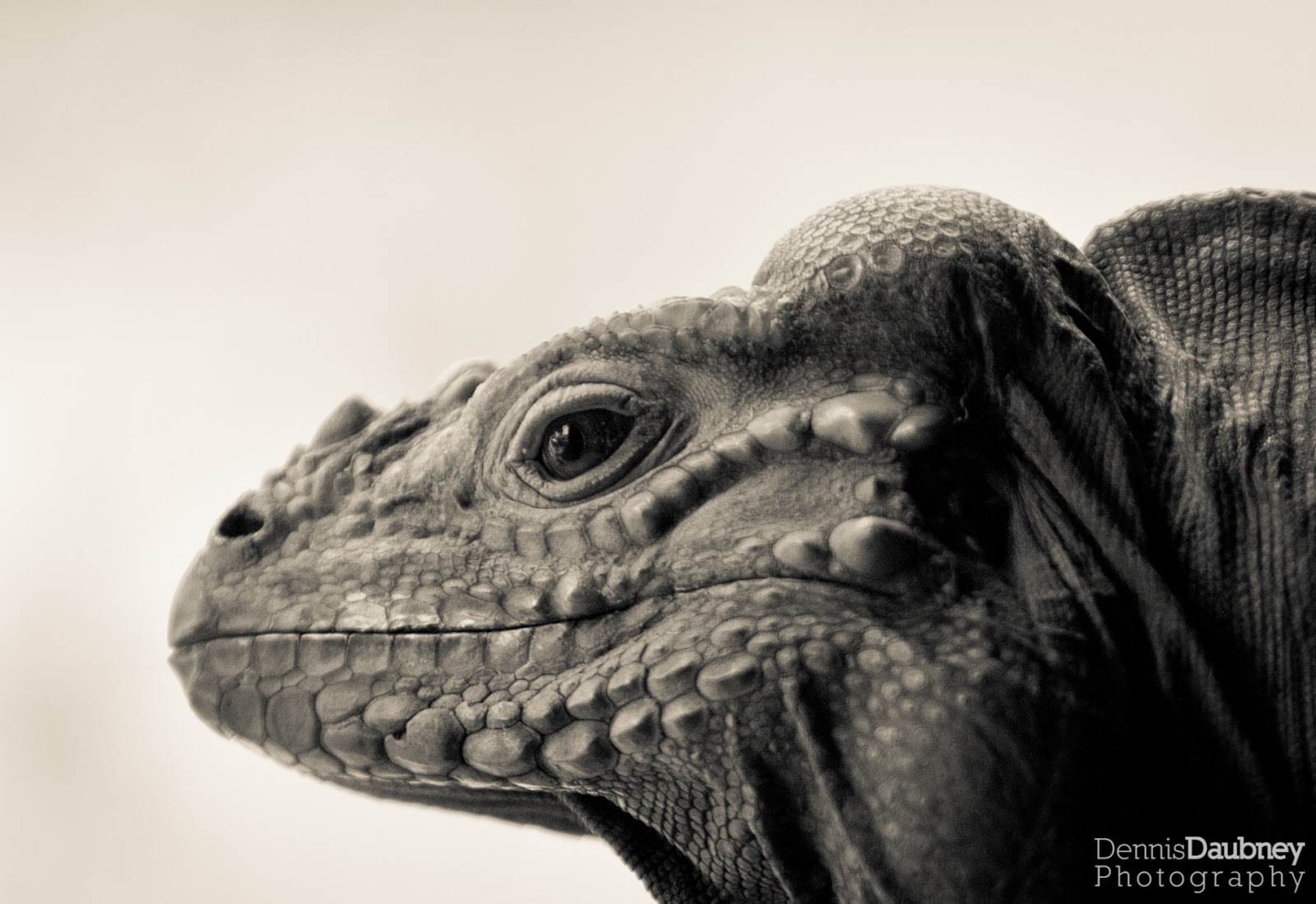
A rhinoceros iguana, here photographed with insight by Dennis Daubney.


Tuesday, December 23, 2014

Understanding Your Old Person

cartoon by Jan Tomaschoff
For a long time, it seems, I've thought I would write a number of posts explaining being old to those who are not.  I'd think of specific things, like how it feels to stand in line at the checkout, slowly identifying the correct credit card and pulling it out with arthritic fingers, carefully putting it through the unfamiliar device only to have it fail, how it feels when a young person grabs it and puts it through so we can all get on with life.  Or I'd watch an elderly woman in the ophthalmologist's waiting room with the daughter who drove her there. The woman is scared of it all, quite reasonably, of the eye drops, the exam, and the probable findings, and tries to chat with her daughter, who would rather read a magazine.  Or I'd think about how it becomes a challenge to take a shower once you've had a couple of bad falls.  And how difficult it is to make big decisions anymore, like getting the bathroom renovated.  I thought each of these was a subject in itself.  I could write a book, I thought.

But this morning I was somehow inspired by rereading John Tarrant's workup on the koan "Bring me the rhinoceros," to see it from a different angle.  I saw that the problem is not that the Old Person in your life has changed; the problem is your re-action.  You don't want him to change.  You want to have A Dad all your life, of course you do; so you refuse to accept the evidence of the strokes.  You say, He could do it if he wanted to - find his keys, eat the food you left in the frig.  You don't want to be alone in this world, without a Dad or Mom to make things right.  We can call this not accepting reality.  Reality is one of those Zen things.

Sometimes our problem with The Old Person is talked about as being at the top of the pyramid now, but it doesn't feel like that at all. The stone at the top of a pyramid is supported by all the other stones. It is a solid position.  Having your Mom lose her Momness is the very opposite; it leaves you without support.  And it seems to come all of a sudden, though the tender decay of aging is slow as rust or lichen.

You are not really helped by the articles online about Being a Caregiver, which encourage you to be more selfish, to consider your needs.  There is merit to the idea of caregiver respite; you may be swinging automatically from tree to tree, doing what you think you ought to do, fleeing from the reality of the breakdown.  If so, odds are that your old person might enjoy a respite from excessive caregiving.  He may not want his very own cellphone; maybe the thought freaks him out.  You may think he needs to get with it.  Maybe you need to get with it, too.

Get with the great hairy beast of change, aging and loss.  The rhinoceros that reality is, barging into our party, upsetting the pitcher of sangria and tearing the hammock from its mooring.  The old person is not a problem, but a person.  Your denial of the reality of her decreasing competence, your insistent desire for security - that's the problem.  Mixed in there might even be your beliefs that you have more important things to do than sit in a hospital room waiting for your old person's doctor to show up, your conviction that you can get things straight.

Things are not straight.  There are no straight lines in nature, and few in your old person's veins anymore. Reality is not a laboratory, more like an amusement park or Las Vegas.  The best way to deal with it is to enter the stream.

The answer is not exactly an answer, or not the one you're looking for.  It is to approach each moment  with the intention to be fully aware of that Old Person, whether it is you or someone else, and of your own mess of reactions.  This growing old is not a curse.  In fact, it is the best way things can go:  the parents get old and die, then the children get old and die.  You might as well vow to open your heart to all of it.

Tuesday, December 16, 2014

Imperfectly Zen

Recently a friend asked me how I've dealt with the 48-hour-cycle of depression I've had for some time now ~ good day/bad day.  I had to tell her I haven't conquered it, though it went to rest during these last two months that included two cataract surgeries, a heart cath (without anesthetic), and frightening shortness of breath caused (it turned out) by a major UTI, which entailed a six-day hospital stay.

The hospital stay in the nice new Heart Hospital was actually the nearest thing to a vacation I've had in a long time; I just put it in there to impress you. The cycling depression didn't bother me much during that busy time.  Inbetween being tested this way and that I enjoyed sitting at the window and watching the Life Flight helicopters come in.  I thought a lot about sudden death. I also thought about depression as a spiritual ailment.

My first inkling of this idea was from Parker Palmer many years ago, his little book, Listen to Your Life,which has become a classic. There he talks about his own disabling major depression, how he learned through it that the way he was living and working was not the life for him.  He had not found his own life and work.
The black cat of depression
I think the word "work" there is important.  It can be hard to do any kind of work when you're really depressed. But we all need to feel useful, even when it's all we can do to stay alive. The women's sitting group that meets in my home has given me work to do, in the sense that there is something I do for other people on schedule.  It was frightening to undertake it.  It has helped to understand that leading the group is not about me.  I'm not giving a performance, I don't have to shine. It's about them - giving them a chance to meditate with friends, to hear the dharma, to talk about their own spiritual lives.  In Zen terms, I took my ego out of it.

I've found that the best way to put aside the dark thoughts and feelings that come unbidden to people with depressive disorders is always just to do the job in front of me (though sometimes intellectual tasks are beyond me).  One of the women talked about this last week, how she moves through her own unwelcome thoughts when she's cooking by putting her mind back on the task.  I've found this is a really good idea when I'm trying to chop carrots - not my fingers.


For me, another key to doing anything is that I don't do it perfectly.  My house is never perfectly clean (oh, I hear my Mother turning over in her grave).  When my group meets, I sometimes forget to put the tea water on. Last time I forgot about the chants altogether until after we got our tea, and so had the wonderful woman who helps me set up.  So we did a chant at the end.  Call it Imperfect Zen.

It happens that leading and teaching on this small scale are part of my way, and they are not for most people, depressed or not.  But there are opportunities to give to and serve the world in every single life. They are there even when we are crippled by depression. When you go to the grocery store, you can smile at the older child who isn't getting the attention the baby gets.  You can let someone cut in ahead of you on your way home. You can give yourself time to walk around the block, a change of air.  You can share a funny dog video on Facebook.  At your worst, you can "like" a friend's post.

It's the holiday season - you can wear a Christmas sweater - you can't possibly look as bad in it as that poor cat.  You can call someone and not talk about how bad you feel, but instead ask how she's doing.  If you're on the phone, not on Skype, you don't need to wear a Christmas sweater, but can stay in your gloomiest bathrobe.  Nobody needs to know.  No matter how the call feels, congratulate yourself after you hang up. You're a nice person.  It was good of you to try.

Friday, December 5, 2014

The Great Way is not difficult, they say

Jizo in the moment when fall meets winter
To repeat what I said to myself a moment ago, "I'm just so old . . . " The rest of the sentence was "and tired," but I was too tired to bother saying it.

I have another UTI.  So, what's ahead for this?  Drinking a glass of water every hour, taking d-Mannose and cranberry, trying to get my Vata-Pitta constitution in balance with the right foods and balancing tea.  Will take a urine sample to the lab this afternoon.  If this doesn't go away or gets worse, then I'm in for intramuscular shots and lots of uproar arranging them.  Oww!

How does this fit in with the Zen poem, Trust in Mind? you're wondering.  Hahaha as we say on Facebook (at least I do still have a sense of humor).  That poem probably didn't occur to anyone, but I've been thinking about it often since I got a calligraphy by Nonin Chowaney of that famous first line:
The Great Way is without difficulty; just avoid picking and choosing.
Digging down in Google I unearthed a 1993 talk by the poet/Zen master John Tarrant on this subject.  I love Tarrant's writing.  Here is a piece of it.

"The Great way is not difficult. It just avoids picking and
choosing." There is a Taoist flavor to this saying. The sense
of following the water path through life. The water if it runs
into a stone, it just makes its way around. The water is clear
and has no attachments which is why we have a little bowl of
water on the altar. Chao-chou has brought up this saying
which he was very fond of and he often liked to bring it up.
And then he said that as soon as we speak, that is picking and
choosing. If we are clear, we hang onto the clarity. This old
student doesn't even hang onto that. Do you still hang onto
anything, or not? So we could say that the greatest method of
meditation is that whatever comes up,just don't cling to it.
Whatever comes up, let it go. If you can do this, you'll find
the way home very quickly. But it's hard. Things stick to you.

What sticks to me seems to be that I don't want to be sick.  Don't want!

Or maybe what sticks to me is that I don't like my aversion to sickness.  I desire not to be caught in these desires to be able to do things. . . . the kind of roundabout a Zen student easily gets into.  It is better to think this way, however, than to keep hammering in your desires and claiming that it's not fair.

I had a perhaps disconnected thought this morning:  I should take a year off and not be serious about anything.  Maybe that is a good idea.  A lighter touch.  A year off.  Dust things, feed my houseplants, play with my photos, arrange flowers. (That's a gladiolia in the Ikebana arrangement below, from another summer.  I like arranging flowers.  It's so useless.)
Sometimes you need to get a grip and do your work, sometimes you need to relax your grip.  There is this from Tarrant's talk, too ~

 So when you meet an obstacle, it is good to remember the Great Way is not difficult, it just avoids picking and choosing.

Maybe avoid so much talking in my mind.  As the poem says, "as soon as we speak, that is picking and choosing."  I'll close with the closing of his talk.  He's talking at a sesshin, about meditation and what comes to the mind, but it can apply to meeting even this old body, to working on accepting every Mu that comes your way.  It has to be fine with you that you're working on it.

Please continue in this way. Trust your own sincerity. You have
begun to gather some attention in your zazen. Do not be too
concerned about what comes to meet you. Just love your walking
and love the path and become one with it over and over again.
That will be enough.


Monday, November 24, 2014

The Four Unpleasant Truths, and a Kicker

Home, and we don't know what is causing this shortness of breath.  But we know I have a well-functioning heart, and no blood clots and don't have a strange lung disease brought on by my Rapamune.  I have yet to get a pulmonary function test, which they prefer to do outpatient.  We have a maybe:  maybe my breathing is impaired by having smoked a pack and a half a day for thirty years. And I grew up smoking passively in a household with two smokers.

But wait, this isn't fair - I quit in 1988.  It was hard, too.  I thought my lungs cleared up when I quit.

Karma isn't fair, but it's just.  All the time you smoked, it was damaging your alveoli.  Bad karma, bad.

But today is another day.  I was sitting doing the multiple eyedrops for post- and pre-cataract surgery and enjoying Tricycle Magazine, when I read this, in an article called The Present Moment.
No one denies the potential benefit from learning to calm or focus the mind, but many Buddhist teachers worry that an approach may be easy and give immediate benefits and yet risk discarding essential elements in the Buddha's teaching.
Wait.  I actually had a little dose of MBSR years ago, as part of a course in overall healthy living taught by my health club.  It did not just risk discarding the teachings - it carefully explained that it had nothing to do with religion.  It was about you feeling better and living longer.

A secular meditation practice is almost never sustained, and I'm here to tell you why.  Because sitting still doing nothing opens you up to reality, and that's the last thing most of us want.  Why is that?

This is a truth abundantly restated on the internet, which has enabled us to complain a lot verbally and visually. And in fact, it's religion - a restatement of the Buddha's First Noble Truth, the truth of dukkha, the suffering inherent in life.  So let me continue in this vein with my Four Unpleasant Realities.

1.  Life sucks.
2.  It's your fault that it sucks.  (a) You think it shouldn't, and (b) you keep trying to evade all the suckiness with distractions, positive thinking, and scotch and soda.
3.  There is a way to bring the volume of suckiness down a bit.
And here's the assignment -
4.  The way is a complex, sustained effort to meet the suckiness face to face, and change the way you act.

Huh?  What?

This was really funny when Tom and I came up with it at the breakfast table an hour ago, but it is not amusing me so much as I write about it.
~~~~~~~~
And there I stopped writing a week or two ago, and got distracted by the second cataract surgery.  Such is old age that I forgot about this draft until now. And I am again stuck with the subject.  Because nobody wants to hear about The Eightfold Path and behave themself.  So I'll cut to the executive summary, which is sometimes expressed like this ~


Sorry about all the black.

But it's true.  And the founder of the Zen I study, Dogen, said that when you get that, you've got it:  life is impermanent. YOU are impermanent.  Not only will you die, but you have no idea when you'll die, today, tomorrow, after you print out your to-do list.  And that goes for everything and everyone you love.  Get that, and you'll be motivated to be with the moment you've got.

So, it's Monday.  Did you need this on Monday?  Yes, probably.  I know I do.

Tuesday, November 4, 2014

Still Here, But You Never Know


Having nothing better to do in this hospital room, thought I'd update the known universe on my condition.

Life is the great Teacher. Only Saturday my sitting group enjoyed this Dylan Thomas poem, because I had quoted the first line earlier to Nancy V. (We have two Nancy's most day, some days three. Really.). As I read it aloud I realized how it is about life and death.  Now I'm here soon to get scanned  for blood clots etc.

But, to my story.  One microbe in this colony of seven billion.  I woke up yesterday much more short of breath and tired before I even got out of bed.  It happened that my annual visit with the cardiologist was scheduled that day.  He follows my atrial fib.  Struggled to shower and get there, Tom driving.  Well, they take difficulty breathing with any exertion seriously at the cardiologist's.  And yes, tightness in chest....so this was exciting. Got taken by squad - five guys! - to the ER and so on. Nitroglycerin patch, aspirins, all that.  Nobody took a video.

And today much more testing, no blood clots found to explain my symptoms, leading to the startling affirmation that I need to get a heart cath tomorrow.  It looks like we will do that, knowing the contrast dye might damage my one kidney and we could have to do dialysis for a while if that happened. But the kidney would probably recover. And that might not happen.  If on the other hand a massive heart attack blows out your heart . . . there are no living donors of hearts.

Life.

I realized something this morning as my night nurse, Rachel, told the day nurse, Julie, all about me.  Looking at Rachel, I saw how tired she was, and she is young, under 30 I'd say. They work on their feet, you know, endlessly interrupted by crises small and large.  It's hard work. Nurses over 50 usually look tired all the time.  For the first time I realized - They work all night. I mean I saw it, I knew what it meant for the first time, how they keep the cities alive.  My consciousness expanded to all the people who keep Riverside humming, the electricians, the miners who dug the coal for the first electric plant, the train that brought it here, the engineer . . . probably the young people who build computer chips from China that schedule the trains.  How all this cushions my life.

Sunday I had been remembering Torei Zengi's Bodhisattva Vow, so that also led me real-eyes this truth a little more clearly.  Here's a bit of it:

Among us, in our own daily lives, who is not reverently grateful for the protections of life: food, drink, and clothing! Though they are inanimate things, they are nonetheless the warm flesh and blood, the merciful incarnations of Buddha.

Tuesday, October 14, 2014

Life on the Other Shore


That it feels different here on this shore than you thought it would does not negate the enormity of the distance you traversed and the strength it took you to do it.  from Dear Sugar, May 17, 2012
Go ahead and read the letter and Cheryl Strayed's answer, which includes the above sentence.  Then come back here.

Now.  I want to talk about enlightenment, something the legitimate Teachers seldom do, because they want you to stop striving to reach it.  Over and over we chant in the Heart Sutra, "no attainment, nothing to attain."  But we don't believe it.  We believe there is something far better than human life that we can achieve if we just hold the pose, so to speak.  And the desire for Shangri-La can motivate us to practice.  

As Dear Sugar says so eloquently, 
We want to believe that on the other side of whatever crap we had to swim away from there’s a crap-free beach where we can lounge in the sun at last. Free and at peace.
She goes on to assure Haunted that many things in his life attest to the fact that he is on the other shore. And I agree.  But . . .

But, boy, there's a lot of crap on this beach, too.  Insects eating up beautiful plants, for example.  Well, the insect likes it.  Needs it.

There are still bugs in Haunted's life, which is why he is writing to an advice columnist.  He's sober and has a good relationship in his life and still doesn't feel good a lot of the time.  He isn't perfect yet.

And that's where an advice columnist can't help you the way an authentic spiritual teacher can.  A pat on the back from Sugar, a hug from a therapist, a gold star, the Nobel Prize, these things elevate your serotonin and dopamine for a while, but not for long.  What a Teacher can do is remind you of The Path.  It is a path of vows and practice that is not particularly about looking for personal happiness, and that promises not perfection but authenticity.  This is true of every path, but here is where I move toward the path I know best, Zen.  This path emphasizes awareness, and growing awareness can be like awakening from a fall off a cliff in a full body cast:  ouch, this hurts, ow, that hurts too!  my toe!!

In other words, awake is the opposite of anesthetized.  It means experiencing new and different kinds of pain, though perhaps less dramatically, not for quite so long.

This is generally a well-kept secret of Zen though Dainin Katagiri was heard to mutter, "You don't know what suffering is until you get enlightened."  I have been quoting that these days as I go through the preliminaries to cataract surgery.

I winced as I wrote that.  I am really afraid of this, and I know it.  Through many years of practice I have awakened to my body -  the part below my neck - and my body flutters with anxiety about letting someone cut my eyes.  Twenty years ago I would have responded to my deep fear with an unrelenting headache and irritable bowel syndrome. And, I suppose, irritable and distracted me.

Is now better than then?  Yes, it is.  My earlier self would have been mindlessly spreading unhappiness wherever I walked, building bad karma that would be flung back in my face.  To return to the metaphor, there is a lot of crap on this beach despite years of practice, but I'm not kicking it at other people.  And I also feel the suns of the Heavenly Abodes and the rhythm of the waves.  And I know crap when I see it, and can sometimes walk around it if I stick to the path.

Or sit down and put on my hip boots.  Not a bad metaphor for the dharma, which reminds us of reality - human life entails suffering.  This is it.  It's okay.

Friday, September 19, 2014

When I'll Be Happy


You know:
When I graduate.
     When I get a better job.
When I find true love (or true sex).
When this move is over.

Of course, none of these joys last very long.  Actually, I did bask in happiness for about ten days after we moved to this house.  What a horrific move it was, 10,000 pounds from two stories and a basement, and Tom couldn't help with any of it, partly because he couldn't do stairs, partly because he's a man.  But we got moved in, staged the old house, sold it, and then - his polio doctor told him he was never going back to work.  Post-polio syndrome advancing.

There went that.  Now I had a man around the house   all   day   long.  And a morbidly depressed one at that.

But that was ten years ago and we adjusted to that and found other Big Problems to ruin our lives.

Today though, the weather is beautiful and I wasn't noticing myself brooding on a Big Huge Overwhelming Problem.  Instead I noticed myself criticizing myself in pretty much my father's tone, "Shut your mouth, you'll let the flies in." Something like that.  So maybe I had allergies as a kid, too.  Today the pollen was getting to me and my slender aristocratic nose was having a hard time streaming air, I guess.  I kept finding myself semi-mouth breathing. Ah jeez.

But that was only the beginning.  Then there was how fat I've gotten (30 lbs. over my high-school weight), and how lazy too, really not active enough in everybody else's opinion, and how I forgot what I came here for, and oh, the mess in the front closet and the kitchen floor and . . . I began to ask myself, When will I be happy with myself?


Actually, on a good day I am basically happy with my privileged first-world life and myself, though little things like that intrude.  Go back under the bed, monster.  On a bad day (which today was not) the self-criticism really flows.  I'm more aware of it now than ever, as I've been working with a book that had me look harder at how I do that.  This is much like Zen - dark enlightenment, it's sometimes called.  This is the part about spiritual practice and personal growth that nobody tells you about, and nobody likes.

So bringing this out into the light, I thought, I'll be happy with myself - that is, I'll be perfect - when I meditate twice every day, clean out the frig, hang up all my clothes, oh, the kitchen floor, get my manuscripts out and published, iron that scarf....

In short, I had a to-do list headed by
Lose 10 lbs.!  Maybe 20!
With at least 100 other things on it.
And that's how women are.

I haven't even touched on the faults other people probably think I have, which I am blithely unaware of.*  So that at least is something to like about myself, that little streak of ignorant bliss.
~~~~~~~~~~~
* The old prescriptive grammar said, "Never use a preposition to end a sentence with"** but I have a PhD in English, and a rebellious streak, AND I'm not paid for this, so I write what I want.
** I know - I'm joking.

Saturday, July 12, 2014

It takes all kinds of Buddhas

Hotei
I've been enjoying the website of Shasta Abbey Buddhist Monastery.  The photos are especially beautiful, and express the serenity of a place where people live quietly and cultivate compassion.

Here is one photo of a statue on their grounds. Hotei is a good image for American Buddhists who choose the lay life and its tangled vine of obstacles.  Below is the description of Hotei on the website.

Hotei (The Japanese name for C: Pu-tai) “He Who is the Cloth Bag of a Monk,” also known as “The Laughing Buddha.” Hotei was a wandering Chinese monk of the T’ang Dynasty, known for carrying a hemp sack on his back, roaming the countryside, spreading joy and goodwill, especially to children. The sack contained endless treasures which he gave freely, characterizing his virtue of selfless giving. He is revered in China as a manifestation of the future Buddha, Maitreya.

The hemp sack seems particularly fitting in these days, when one state after another is legalizing the use of its close cousin, marijuana, in America for the purpose of temporarily evading one's suffering. Zen works on that, too. Zen students will recognize how Hotei calls to mind the image of the last stage of the spiritual journey, from Ten Bulls, a text you could call iconic (except that I've grown to hate that word - what in the world did we used to say?)  In that, uh, important work, the spiritual journey is completed when the Zen student re-enters the marketplace with a wineskin over her shoulder, that is, relaxed and re-creating a life of creative giving.

Just saying. (And who doesn't hate that phrase by now?  Just kidding.)

Thursday, July 10, 2014

Need Demotivated? I Can Help You


Yes, you read that right.  I think it's time for Grandma to share some of her own tips for constantly demotivating herself.  Not sure how funny this is going to be, though I started with an idea of parodying yet another of those about 8,790,000 online articles about how to get yourself to do something you ought to do when everything in you cries out No! Or at least, most of you does, and hey, it's July.

But what about demotivating yourself?  A mere 59,000 entries about something all of us do most every day.  You can see this is a field crying for more content.  Meanwhile, exploring this got to be fun right away.  I took the quiz on demotivate.com, whose motto is, "If you're happy and you know it, find another site."  Their other motto is,

 Life sucks, give up.  
The quiz told me I am ~
On your way to true demotivation You are headed on the right path, just pick up a few bottles of vodka, wait til your dog dies and you will begin to finally feel how worthless your existence really is!
It's interesting to a demotivator to look up images for "Life sucks."  On one hand, you quickly get sidetracked into things like Cheezburger, which collects "epic fails," the best of which involve trucks whose drivers were probably both stoned and working above their pay grade.

At least half of what comes up on Google about demotivation is trying to motivate you in a sickening sweet way.  Now, I don't blame the people who make those posters, and sometimes put them on Facebook.  I know lovely people who do that now and then.  They are just trying to feel better.  I blame the society for making us all want to BE SOMEONE, and telling us that you can do anything if you try.  Especially when it tells you you can feel better if you try.

(Parenthetically, you really can't make yourself feel better, take it from an expert.  What you feel, you feel, including long bad moods that are profoundly karmic in nature.  But you're not allowed to be depressed and listless, are you?  It makes your friends nervous.  Actually, moods - energies - are catching, that's been studied, too. It feels good to be around a hypomanic, for a while.  Same is true of a depressive, except backwards.
[Even more parenthetically, I had the perhaps unique experience of being yelled at in a psych ward by another depressive for being depressing.  Specifically, I was playing Barb'ry Allen on the piano, which is not nearly so bad as cracking gum loudly and glaring at someone who is playing a sad song.  Psych wards are full of passive-aggressives, of course, the resident doctors being the worst.])  
Okay, where was I?
 
I wanted to be a little Zennish for a moment. I wanted to say that, while demotivation from outside can work, unfortunately, motivation from outside does. not. You can find learned articles about experiments that demonstrate that, if you are a scholarly type.  If not, allow me to summarize:  a sign on your wall, a post-it on your computer, people telling you to cheer up (don't you hate that?), these things do. not. work.  I know I am annoying you with my feeble cliched attempts to emphasize the point, so I'll make the point and run:  to be sustained in an effort, your motivation has to be internal.

Nor is internal motivation always good.  For example, you may have internalized at a very young age that if you were only good enough, your father would love you.  At least respect you.  And actually, painful life things like the delusion that you can make rejecting parents notice you often lead people to work hard and do good things.  Though mental constructions like that (if you only work hard enough . . . ) are often proven to be incorrect (are delusions, in Buddhist terms) with disastrous results.

And this post is long enough, so click here for a coffee mug that will help you stay pessimistic.  It's hard, with all these puppies and kitties on Facebook. Remember, they only enjoy life because they have little tiny brains not capable of hanging onto elaborate mental constructions.  Bless them.  Well, bless us all.

Tuesday, July 8, 2014

Music and words and work and . . .

No, not this kind of carpenter ant.  THIS kind . . . 


Words. I have always loved words, as art, making word art (poetry, fiction), escape, words and puzzles, which have something in common:  both mental constructions.

If you have to have words, you can take them into the body with sound.  One way I have healed as a person, I guess I could put it that way, is that now music enters my body and my body expresses it.  Not just toe-tapping.  Chair-dancing.  Better to do it standing up.  Then you can move your feet and it's just dancing.

Saw The Carpenter Ants Sunday at Natalie's Pizza here in town, right here in Columbus, Ohio, which was a cow town when I moved here and is now a pretty cool place.  So is Natalie's.  The Rev. Bush, above, commented during their show that when you walk into a place and there's the owner to greet you, you know you're going to get good food.

If you want a Buddhist lesson, there is an important one in that.  Natalie owns it, designed it, it expresses her, it is her work and that work gives something of value to the world.  That makes her a very lucky person - she has found what she has to give.

I am dis-couraged about that myself.  Giving poetry is hard; most people don't want poetry in this, what my students would call "today's modern contemporary world."  (I still laugh a little when I write that. Bless their little hearts.)  And I guess it is hard to separate yourself from the desire to suck-cede, I mean succeed, to Be Someone, to Matter, to imprint the world, so as not to totally die and disappear.  Why should I bother with a poem or, of course, with this blog?  So one day some lonely adolescent behind a locked door, some elder who's not very mobile anymore, will feel connected, might feel connected to me?  That's what I got from poetry when I needed it.

That would have to be the motivation, because there ain't no money in poetry, and many people competing for it.  And because poems come to me, so it's something I do, weird and archaic as it's become.  I like words on paper more than words in the datastream.  I actually rediscovered recently the pleasure of writing with a wooden pencil.  I'd forgotten.

So that, and getting used to Being Ordinary.  I wonder how many other people get the edged gift at birth of a mother who is sure you're going to Be Someone Special, though she never was?  It seems to propel some people, though not into poetry. Not that being Special is the road to happiness; I'm sure it's not.*

And gosh, I almost left out how hard it is to be old, energy depleting, and on top of that cursed with a cycling depression.  At least the damn thing cycles up the hill as well as down.

Music is good for you.  I recommend it.  I vow to listen to it and to make it, if only by tapping a spoon on a glass and a wooden table.
~~~~~~~~~~~~~

*I just used that semicolon with defiant pleasure, because Kurt Vonnegut taught never to use them.  I don't have to listen to other people on these things anymore.  At least not in this blog.

Friday, February 28, 2014

Died and Gone to Heaven, Metaphorically speaking


Your brain on Buddha
I feel like I just won the lottery - got a long-awaited call from my nephrologist that I can very slowly ramp down on one of the immunosuppressents I take to keep my donated kidney from being rejected by an alert immune system.  Why would you want to go down on these lifesaving drugs?  Because they suppress your immune system.

Take last night - I was suddenly stricken with Herpes on my lips - cold sores to you - so suddenly that it scared me.  I felt unwell, and the whole left side of my face felt irritated and involved, including that eye.  My eyes are one of my favorite organs.

A whole lot of people have had cold sores and harbor the herpes virus forever in their bodies, but it is dangerous to the elderly and to the immunesuppressed.  I happened to have a doctor appointment today, so I mentioned it and he looked at it and talked to me about it.  It looks okay, and he didn't prescribe an anti-viral, but I should call immediately if this infection gets worse. . . .

This is why it is said a transplant is a treatment for kidney failure, not a cure.  So, you know, you do what you have to to stay alive, but you don't always enjoy it.  Even if you meditate.  Zen is not about eternal bliss, but about being fully alive.

I always like to post pictures, but you sure don't want to see pictures of cold sores, or if you do, GIY.  Above, one of these pictures intended to make you want to meditate.  Perhaps I should note that my kidney was given to me by a woman I hardly knew, who had sat with our Zen group one night when I was doing orientation.  That's quite an outcome of being in a meditation group.  Unusually good karma, indeed.

And that makes me want to post a favorite puppy-dog picture, which I may well have posted before.  So here:

May you have some good luck today, too.

Sunday, February 16, 2014

What good poetry is

File:Gerard Manley Hopkins, Rowan Gillespie.jpg
Sculpture and photograph by Rowen Gillespie
I am periodically suffering keenly these days along with a dear friend who's in the worst of the chronic illnesses, profound depression.  I can be too empathic, having experienced that myself.  It was long ago, but it was a long trek out of that landscape.

And I hate not being able to help someone else much.  You aren't, you know.  I was taken aback when I read in Bernie Glassman's book, Instructions for the Cook, that a bodhissatva goes to the well for a teaspoon of water, climbs the hill, gives a thirsty person that water, goes back to the well.  What?  I thought surely one could do more than that for the world.  Glassman himself keeps trying to do grand things - he once vowed to end homelessness - but I'm not sure how much they work out.

I found myself remembering the last line of this poem.  I, of course, would revise the penultimate line to read, "It is the blight we were born for."  I really dislike the use of "man" to represent the species.  It's part of that invisible water of patriarchy we all swim in:  men are human, women, are - other.

Hopkins was a deeply spiritual man (who has been described as "gloomy.")  I imagine he would appreciate the correction.  They didn't know better back then.

But how the good Jesuit nailed it in this poem.  It is ourselves we mourn for.

~~~~~~~~~~~~

Spring and Fall
     by Gerard Manley Hopkins


to a young child
Márgarét, áre you gríeving
Over Goldengrove unleaving?
Leáves like the things of man, you
With your fresh thoughts care for, can you?
Ah! ás the heart grows older
It will come to such sights colder
By and by, nor spare a sigh
Though worlds of wanwood leafmeal lie;
And yet you wíll weep and know why.
Now no matter, child, the name:
Sórrow’s spríngs áre the same.
Nor mouth had, no nor mind, expressed
What heart heard of, ghost guessed:
It ís the blight man was born for,
It is Margaret you mourn for.

Tuesday, January 28, 2014

You got shackles on your feet? This man has the answer.


Yesterday a great Teacher died. Start the above video playing, and pay attention when it gets to about minute seven.


We had the good fortune to see Pete Seeger in person here in Columbus, Ohio, test city of America. His opening act was a girl group whose name I've forgotten, but I'll never forget them singing a feminist treaty titled, "Show Us Your [obscene slang for penises]." The governor, whose name was Dick, though "dick" was not the word, was there, and you could see him in his box laughing his ass off.

Gosh, that was a long time ago. Around then my brother bragged about how he'd been to a nude beach somewhere exotic. This turned out to be where men and women alike wore bikini bottoms, or Speedos, I suppose, and nobody wore a bikini top. Huh. For one thing, that's not what "nude" means.  More correct to call it a breast-display beach.  For another thing, it didn't seem fair. If women are going to show off their sexual characteristics (as defined by this ridiculous society), you'd think men would, too. My family didn't understand me, but Pete Seeger would have.

I first heard folk music when I was 18 and pregnant. I'd iron my husband's uniform in the basement, playing The Kingston Trio over and over. So, second-hand folk music, better than nothing. Much later I developed a desire to do something I never was fit to do, play folk guitar. And sing. . . . Listen to Pete here~

". . . I fell asleep. When I woke up I had shackles on my feet. That's everybody's history."

By God, that's Zen. Like the man said, these old songs will never die. They are our condition.

At that concert, Pete ended with Guantonamero. He came forward on the stage in this rather intimate hall, just him and his banjo, and we all sang and swayed. Years later I ended a church service with that song.  Everybody uplifted, swaying.  Almost everyone.  Later somebody told me there were too many verses. That's public life for you.

Listen to this one.  In one place he translates, "For the evil one, I do not cultivate thistles.  I cultivate the white rose."  If it sounds like the Dalai Lama, it is.