Showing posts with label death and dying. Show all posts

Saturday, June 1, 2013

Life After Death

Excellent visit Thursday with a learned breast specialist.  Entirely reassured.  (If you are on Facebook, there's somewhat more on my Page there.)  This is not cancer.  Dazed and confused.  Sleeping happily.

Before the appointment we had a great expensive lunch (they make their own ginger ale!) and Tom drove along the lake, and I took this picture of a sizable boulder by the side of the road.  Kind of looks like it's been in a few collisions, like me.

Together, Tom and I wrote this haiku -
ancient stone
names of lovers
inscribed in fading paint
So blown away by being alive - having (maybe, of course) more life ahead, and noticing the attempts by my conditioned self to get me back in the living grave we call a rut.  Now I have to catch up on all the things you have to do if you're going to stay alive - went to the health club, the grocery store . . . collapsed.  It's been a long hard year, so far.  Maybe I've used up my trouble quotient for 2013.  I wish.

Last night, browsing around on Wild Fox Zen, I happened on this poem, translated by the poet Robert Bly.  It reminded me of a time years ago when we left a great party with people playing bluegrass in a packed living room, a warm and inviting house, and no alcohol or smoking, a definite bonus.  When we stepped outside, pow, cool night air, a sky full of stars.  I said to Tom, "This is what a good death would be like - you leave a great party and step out into the stars." But actually dying, when I thought it was approaching me and remembered the deaths of people I loved, actually dying is not a party.

This poem reminded me of that experience, how hard it can be to let go of this body's life, then how wonderful the lonely empty could be.  I have my own poems that I regretted never publishing when I realized I might not have time.

I've been astonished how many poems came to my mind and came my way that showed deep understanding of life.  However, and I don't know anything about Bly, many wonderful writers and artists have not had happy lives - many are bipolar, whence cometh the creativity, but which is hard to live with and, in my lifetime, has not been treated appropriately.  You can get the idea of the wonderful, you can render it in art, but bipolar experiences and emotions are acute, and learning to live with these realities is another thing entirely.  The only significant help I've had has been from Zen masters.

The Silence Afterward
                       Rolf Jacobsen

Try to be done now
with deliberately provocative actions and sales
   statistics,
brunches and gas ovens,
be done with fashion shows and horoscopes,
military parades, architectural contests,
and the rows of triple traffic lights.
come through all that and be through
with getting ready for parties and eight possibilities
   of winning on the numbers,
cost of living indexes and stock market analyses,
because it is too late,
it is way too late,
get through with and come home
to the silence afterwards
that meets you like warm blood hitting your
   forehead
and like thunder on the way
and the sound of great clocks striking
that make the eardrums quiver,
because words don’t exist any longer,
there are no more words,
from now on all talk will take place
with the voices stones and trees have.
- – -
The silence that lives in the grass
on the underside of every blade
and in the blue space between the stones.
The silence
that follows the shots and birdsong.
The silence 
that pulls a blanket over the dead body
and waits in the stair until every one is gone.
The silence
that lies like a small bird between your hands,
the only friend you have.
~~~~~~~~
I have personal experiences and reasons to trust that in the end, the Absolute is our friend.  After all, it's your own Mom.

Friday, January 18, 2013

Waking Up All Over Again

Wheat Field, Vincent van Gogh
I have learned that waking up to reality means waking up over and over - these can be called realizations as opposed to more mystical epiphanies.  You realize something.  Then years later you realize it a little better, more deeply.  This is about one that took me fifteen years.  Therein lies a tale.

It is the story of when I was diagnosed with breast cancer in 1997 - a diagnosis that put me into the second half of my life in an instant.  By that I mean that all six urgent imperative things on that day's to-do list crumbled to dust.  Goals, dramas, everything - my God, you mean I could die?  Let me emphasize that:
  I could die?
What, at 53? 

I had no symptoms, no family history.  The growth was found on a routine annual mammogram that I'd put off for six months because, you know, I hate mammograms.  They hurt.  The small but mighty growth was already invasive.  The surgeon told me that by the time a lump was noticeable, it would have metastasized everywhere in my body.  I am alive today only because I had a privileged life that took good health insurance for granted, and I was raised to be a dutiful person.

My body will die.  You may think you know that, whatever age you are, but what I've learned is that most people don't, really.  They can live to be 90 and get mad that they're dying.  Astonished that their 80-year-old mother dies.  I knew a woman of around age 50 who died of a heart attack in the recovery room after an elective surgery, but was revived.  I visited her in the hospital and she was so delighted and relieved to be alive.  She was in a weekly group I was in, so I saw her bright eyes glaze over as the weeks went by until she was her old self again, overscheduled, on yet another fad diet. Sleepwalking.

After my own surgery I went for radiation therapy five days a week, all by my brave little self.  It was wretched.  They strap you down, they shut a big lead door.  You have never been more alone in your life. 

I was so anxious that through all those treatments I recited the 23rd psalm over and over to myself in my mind.  I belonged to a Unitarian church, and it had been decades since I would have called myself a Christian, but I had not rejected the good parts. The Lord is my shepherd, I shall not want.......That's what came to me.  He maketh me to lie down in green pastures.  He leadeth me beside the still waters.  He restoreth my soul.
Water Lilies, Claude Monet

 I often waited for my treatment in a tiny waiting room, shivering in my hospital gown, with a cheerful African-American woman named Mary whose kids had bought her a beautiful yellow satin pajama top because none of the gowns were big enough for her.  She wore a pendant with a portrait of the pretty Caucasian Jesus of my Sunday School posters. Maybe that had inspired me.

One day we were talking aimlessly and she said, "At first I thought, Why me?  Then one day I realized, Why not me?"  I took that in, but I knew I didn't quite get it, though "Why me?" had not been one of my own thoughts. I don't know if I had thoughts, or just panic.

Here's what I think now:  "Why me?" comes from being located in our small individual self.  It's easy to see that you have friends whose lifestyles are way worse than yours, and you eat right, and yet you're the one who got hepatitis - it isn't fair.  In some subtle way, we believe things should be fair.

I don't know what made me think of this recently, but when I did I said to Tom, "Oh.  I get it. Why not me? comes from realizing our oneness."  Buddhist talk, meaning that the larger point of view understands our common humanity and mortality.  Everything and everyone's going to die - why would I be the exception to that?  Everyone's subject to accidents, why would I not be? 

If the idea gives you the shivers, The Five Remembrances are printed at the bottom of this blog.  This traditional Buddhist chant has helped me get used to the idea.  Well, somewhat.

Thursday, October 25, 2012

Be Careful What You Want

Tucked-paw restorative yoga
As sometimes happens, a comment made on my blog inspires me as being wise, and something I should write about.  It comes to this:  things often don't go my way.  My way.  The way I like or plan.

Actually, this is very serious in our lives, it's not just about small stuff like getting into that pottery class or having to visit with a difficult person (who might just be a relative).  I've seen people be very stubborn about life and death their way, hang on to life, complaining that it isn't fair for them to die at this age, they don't want to die, they refuse to die.  This is how some people respond to a very bad prognosis, such as metastasized cancer:  I'm not going to let this beat me.  It is sad to be in a group with someone like that and see them try so hard not to accept the inevitable.

We are working on the big issue around here right now, having lost so many people to death the last couple of months.  We will be offering a course at our church in January based on the book Being With Dying. A lot of this will be about accepting our own mortality.  But I was going somewhere else with this that is probably connected somehow....to a documentary we watched last night on Netflix that has me thinking.  It was called Happy.

One of the things I like about watching movies at home is that I can fool around baking cookies at the same time and making notes on my iPad.  I knew that happiness is not found through external goals, such as more- than-enough money, status, things, winning.  But what surprised me is that it depends on the kind of goals you have.  The big three are -
to help others
to grow personally, spiritually
to maintain close, connected relationships
This is so cool - the scientist who talked about this, Richard Davidson, turns out to be a long-time meditator, and friend of our beloved friend, The Dalai Lama, who himself appeared in this documentary, too, explaining how compassion is intrinsic in human nature.  That gives rise to the interesting possibility that you don't have to work on compassion - just vow not to get in your own way. 

Saturday, September 22, 2012

I saw this amazing thing


The above photo is of the catacombs in Paris, always a tourist attraction, I understand.  I learned recently that flash photography was invented in order to photograph this dark tunnel. This is not your blinged-up  Halloween.

There is a lot written about the moment of your own death.  Buddhists desire to be lucid and conscious of entering the great light.  But we have a chance to practice confronting death numerous times in our lives - the deaths of others.  I think that's what bothered me about the most recent funeral: everyone quickly pulled down the iron shield.  There is a way to use Christianity to step away from this material world of loss and into talk of heaven and how special we are, the ones who believe the right thing. And the preacher used that to the fullest.

But the real magic trick was what the family did, elevating Dad (I wish I could artistically show the aura around that honorific that I heard in people's voices) to this wonderful fun person.  Erasing 95% of his personality and 99% of the truth of his life, the mundane, the sad, his frustrations, his limits, the long, sad decay of his body and mind.  Firmly putting in a beautiful walnut box with a brass plaque not only our personal loss and sadness, but also the fact that we, too, will die.

A death ought to leave us feeling like we are in the funhouse, the part where you're suddenly in the dark and the wooden walkway keeps shifting under your feet.  Death is sobering.  And people don't like it.  I've seen many people jump right over that initial moment of tears and start writing the fiction and planning the big party.  What a mess.

Awareness makes death hard for me to take.  At the same time, I know that Buddhism has it right:  life is  dukkha, life is hard.  Unsatisfying.  The very nature of life is constant change, and change means loss as well as gain.  You will lose people you love, and you will lose your own life in the end. Figure that out and maybe you'll stop spending every fourth Saturday in the beauty salon getting artificial.  Don't figure it out, and you will feel dissatisfied at the very moments of life that "ought to" be gratifying, the Thanksgiving meal, the wedding, the birth.

Change is hard, is both death and birth.  Birth - awareness - is hard, painful and messy.  Sometimes I wish I could give it up.  That makes me think of another of my favorite poems about the difficulty of giving up magic and theatre and pleasure, and acknowledging reality.  "Journey of the Magi" was written by a devout Christian, T. S. Eliot.  You can both listen to and read it here.

Friday, September 21, 2012

How to Perform a Funeral

Resurrection lily
I opened this blog this morning because I had something to say that was urgent enough to interrupt my preparations for a shower. It was this: I've been to four funerals in the past two months, and I've seen more than one pattern.  One of them is that people collude to talk about what an ornery prankster cute person someone was.  And I didn't recognize that person at all.  It seems to be about not wanting to tell the truth about someone who was hard to love and unsatisfying.  Maybe not wanting to see that reality.  When there are lots of conflicted feelings, the past gets remodeled.  (But isn't that how people are, anyway?)

I have a sincere request: don't do that to me when I die. I have no idea whether an "I" will be left, and if so, whether I will be around to know what you do, or care.  But I'd just like to think that this wish of mine will be respected. I am a real person. If you can't say something authentic about me, just sit there and say nothing. That will do. Don't invent some lovable eccentric (notice how I am leaving out cuss words here). Don't invent me after I am dead. 

In line with that general idea of acknowledging the real life and death of a person, here is a wonderful poem that I remembered as we drove home yesterday from the funeral for Tom's father.  I read it aloud to Tom and we both felt grounded at last. Williams was a physician, so he got to see plenty of phony covered-up plastic smiles and talk about heaven and love and faith, and weird distortions of the past, enough to make him write this.  There is only one thing I have faith in - I, too, will die.  I don't know when.  I told Tom to begin my own memorial service with this.

                 Tract
                      by William Carlos Williams

I will teach you my townspeople
how to perform a funeral
for you have it over a troop
of artists—
unless one should scour the world—
you have the ground sense necessary.

See! the hearse leads.
I begin with a design for a hearse.
For Christ's sake not black—
nor white either — and not polished!
Let it be weathered—like a farm wagon—
with gilt wheels (this could be
applied fresh at small expense)
or no wheels at all:
a rough dray to drag over the ground.

Knock the glass out!
My God—glass, my townspeople!
For what purpose? Is it for the dead
to look out or for us to see
the flowers or the lack of them—
or what?
To keep the rain and snow from him?
He will have a heavier rain soon:
pebbles and dirt and what not.
Let there be no glass—
and no upholstery, phew!
and no little brass rollers
and small easy wheels on the bottom—
my townspeople, what are you thinking of?
A rough plain hearse then
with gilt wheels and no top at all.
On this the coffin lies
by its own weight.

No wreathes please—
especially no hot house flowers.
Some common memento is better,
something he prized and is known by:
his old clothes—a few books perhaps—
God knows what! You realize
how we are about these things
my townspeople—
something will be found—anything
even flowers if he had come to that.
So much for the hearse.

For heaven's sake though see to the driver!
Take off the silk hat! In fact
that's no place at all for him—
up there unceremoniously
dragging our friend out to his own dignity!
Bring him down—bring him down!
Low and inconspicuous! I'd not have him ride
on the wagon at all—damn him!—
the undertaker's understrapper!
Let him hold the reins
and walk at the side
and inconspicuously too!

Then briefly as to yourselves:
Walk behind—as they do in France,
seventh class, or if you ride
Hell take curtains! Go with some show
of inconvenience; sit openly—
to the weather as to grief.
Or do you think you can shut grief in?
What—from us? We who have perhaps
nothing to lose? Share with us
share with us—it will be money
in your pockets.
Go now
I think you are ready.

Monday, September 17, 2012

Into the Dragon's Jaws

One, seven, three, five—
Nothing to rely on in this or any world;
Nighttime falls and the water is flooded with moonlight.
Here in the Dragon’s jaws:
Many exquisite jewels.
~Setcho Juken (980—1052)

I was looking for the Year of the Dragon stamp from the US post office and discovered a world of charming stamps.  These are Vietnamese - I didn't know there was a year of the cat.  There is a legend that the cat was the only animal that refused to honor the Buddha ( I wouldn't be surprised), and I thought it didn't have a place in Eastern astrology.

Anyway, the poem.

I woke up to a hard day, getting ready for a funeral.  I have become attached to the many things that make me comfortable, so I think, Don't forget the heating pad! (which I use on my back twice a day).  I remember times throughout my life of sitting in funeral homes, everyone determined to "be strong" and show no grief because now his suffering is over and he's with the Lord.  That kind of thing.  Long before I got on a path to awakening, I felt surely that was not right.  I suppose I was picking up on the contained grief.  And, to be truthful, these long hours of doing nothing, not grieving, were very boring to me, and I hate to be bored.  Maybe I can pick up on it now as the "cool boredom" Chogyam Trungpa writes about, just be there as if in meditation, just sit there.

I wonder what jewels there are in this nighttime of a great loss, in the very Dragon's jaws.  I can't help it, that makes me imagine a dragon wearing grillz.  I can't find an image of that, so here is my favorite dragon, Skosh, who has befriended an artist I know. It wouldn't surprise me if he had grillz.


[Thanks to the How To Be Sick website for the poem.]

Sunday, September 16, 2012

Letting Things Change

the most fun thing I photographed all  week
This morning I woke up miserable - many pains and bad dreams/memories of a bad time in my life that I survived only through luck. I tried ducking back in bed, warming up, but it didn't work, so I got up, dazedly drank some coffee, and stretched and meditated. Sigh. This is the fibromyalgia at work, caused by major weather systems and the change of seasons. As if it's not bad enough to be bipolar.

One thing I have learned by experience is that I am not so depressed when I am meditating. I think that's partly because I am working, concentrating on following my breath, turning down the volume on unhappy thoughts. Also, when I meditate I intend to be receptive to space and the universe, a sort of listening similar to contemplative prayer.

But after that I was a mess again. Had to ask Tom for advice on which sweater to wear (he chose orange), spent ten or fifteen minutes putting a necklace on, partly the clumsiness of arthritic hands, partly the brain fog, a feature of fibromyalgia. It depresses normal (non-bipolar) people. And I think I'm over-medicated now as well; we'll see where this mood goes. But got dressed, got to church - on time! It was a beautiful sunny fall day.

At the door I met Catherine, a woman I know largely through Facebook. She is someone I feel warmly toward, because a while back she offered to tie-dye some of my boring white socks after I posted how frustrating it is to look for socks when you have large feet. I was on the tall side earlier in life, 5'8", though I am compressing now, and my feet have spread with age to size 11 1/2 narrow. I don't mind having big feet anymore, as I have figured out what feet are for, and am glad to be walking on them, but I can hardly find shoes that big, and no pretty socks.

Catherine stopped and said she wanted to tell me she reads my blog, and Thank you for sharing. Ahh. I was still cold, but I felt warmth in my center. And I felt somewhat enlightened by her comment; I realized my identity a little better, that I see this blog as an extended circle of friends.

I was still morbidly depressed. The sermon was interesting, and during it I wrote a poem that touched down on the memory of that very bad time in my life I had dreamed of. I wondered whether this was a significant date - I am sensitive to birth and death dates, sometimes unconsciously. And indeed, my mother's birthday was September 17, tomorrow. I don't remember her death date consciously; it was also in the fall. And here we are in this parade of deaths, our friends Teena and Greg, and now Tom's father, whose service is next Wednesday. Travel with our array of health problems can be an ordeal. Add to it all that grief.

After the service we came home and Tom cooked sausages and whole-grain waffles with maple syrup, and as I ate my mood moved up, who knows why.  I have never enjoyed a meal more. It inspired me to clean up the kitchen and put together a casserole for tonight. Cooking has become a sometime thing for me, and I welcome the times when I feel like doing it.

The thing I know now about pain and depression is that these things, too, change, and change faster if you don't grasp ideas that now your day is ruined, or your week.  Or that it's not fair - that was part of Mark's point today - it's not about fair. If you make a point of staying open to the moment, the whole world around you is changing, full of potential. This understanding is one of the teachings that makes Buddhism a religion, distinct from meditation for your health or to improve your business decisions.

[The image is the canopy for a fairy-tale like little bed in one of the Sunday school rooms in our church. Creative dance was held in that room yesterday.]

Friday, September 14, 2012

How we Grow (Old)

The women in my art group and I agree that the reason we grow wiser with age is that you get lots of learning opportunities.  You fall down and break something and get to experience disability and chronic pain.  Your vacation plans fall apart when a quietly ailing parent begins to refuse food. I think that whenever one of these moments arrives, you decide whether to be with the truth of it or to work harder to maintain your illusions about yourself. 

I think the best thing I've learned yet is to keep letting things go. You can think of meditation as practice in that:
inhale deeply
exhale, let it all go
rest at the bottom of the breath

But this is easy compared to the things you have to let go of in life practice.  Name one.  Okay.  Travel.  Uh-oh.  Should have gone to Paris when I could.  Definitely.

But losing that came later.  Earlier came - you know - losing youth.  Maybe not at 30, maybe it was at 40.  Women worry about losing our figure; men about losing hair.  But also a certain sense that you can roam, can change your whole life, do great things.  That there is lots of space, lots of time.
~~~~
I was moving slowly with writing this when Tom came into my study with his phone, his sister on the phone, his father died at 6:00 this morning.  This is after months of slow, inevitable decline; we have been waiting, especially this last week, when he began refusing his medicines.  He was almost 93 years old.

Then it became clear to me what I wanted to say about old age.  We have a chance to learn that a great deal of life is not in our control.  Life is not us moving around, deciding our future; the world keeps moving big blocks around that affect us and change our lives. Sickness, our own, others.  The inevitable aging of every part of our bodies.  Death, sudden or slow, of people who matter to us.  And we cannot escape this. Time once more for The Five Remembrances, which are posted at the bottom of this blog.

Saturday, September 1, 2012

In Memory of a Great Oak

It is right and proper that a great many people are mourning the untimely death of Greg Houston, one of the kindest and most generous people I have known.  He died in a one-vehicle crash last Monday morning, and a whole church is mourning him; his memorial service will be tomorrow at 1:00.  I believe there are plans to plant an oak tree on the grounds of the church in his memory.  It was Tom who said, "if Teena was a wildflower, Greg was an oak."

It almost seemed wrong that Tom and I, and many others, are mourning Greg so when we were not family members or even best friends.  Just - friends with someone we all knew was an unusually good man.  But I remembered some lines of poetry, as I often do when a death is hard to bear, and was able to find the poem.  I am reprinting it here.  It was this poem's last lines that consoled me, how it says we have the right to grieve a death however much we do, even if it's "just" a student or a pet, even if we have "no rights in this matter."  The poem, written in 1953, brings to life a girl who may be otherwise little remembered.  This is one of the things art can do.
I remember the neckcurls, limp and damp as tendrils;
And her quick look, a sidelong pickerel smile;
And how, once startled into talk, the light syllables leaped for her,
And she balanced in the delight of her thought,
A wren, happy, tail into the wind,
Her song trembling the twigs and small branches.
The shade sang with her;
The leaves, their whispers turned to kissing,
And the mould sang in the bleached valleys under the rose.

Oh, when she was sad, she cast herself down into such a pure depth,
Even a father could not find her:
Scraping her cheek against straw,
Stirring the clearest water.

My sparrow, you are not here,
Waiting like a fern, making a spiney shadow.
The sides of wet stones cannot console me,
Nor the moss, wound with the last light.

If only I could nudge you from this sleep,
My maimed darling, my skittery pigeon.
Over this damp grave I speak the words of my love:
I, with no rights in this matter,
Neither father nor lover.
[The image above is a Zen garden in the Bloedel Reserve, built on the site of the swimming pool in which the poet Roethke suffered a heart attack and died in 1963, at age 55.  I understand this garden is open to the public, but Roethke is not memorialized there by any sign.  I didn't remember this when I went looking for this poem, but Roethke - like so many great artists - was bipolar, which was called manic-depressive back then. Lithium was not yet used as a treatment in this country, and it would be decades before less dangerous treatments were developed. Bipolar disorder is still not curable.]
^

Tuesday, August 28, 2012

Touching Base

[image: Thanks to Chris Hardin for suggesting this illustrated quote as a fitting homage to Teena Price, who was a wild flower.]

I have relatives who don't love me the way I wish they would, don't you?  The weather has been too hot, the air quality is so bad I have to wear a mask outside, my moods are up and down, I'm having an awful time with sleep, and I have to wear elastic on three of my four limbs, and sometimes I hate all this...... But today I am shrugging these things off (all but the depression, to be truthfull).  The universe has been giving me opportunities to see my problems in perspective.

As I wrote previously, Saturday night was a wrenching memorial service for a friend who died last Thursday.  This morning a beloved friend was at our front door to tell us that another friend died yesterday.

Greg Houston was 61 years old and seemingly in good health.  His truck went off the road for no apparent reason, and he was dead by the time the medics got there.  Greg and his wife of over 40 years are important to us, and to many, many other people, because they are lovely people who exemplify a life of compassion and generosity.  For a couple of years Greg has come over periodically to help Tom with projects around the house; it was a joy to me to hear them working together, both so polite and careful.

Yesterday Tom got an e-mail from Greg asking if he'd like help with anything.  The subject line was, as always, Touching Base.  If you want to know what it means to "lead with your heart," Greg was a fine example; Greg actually touched base; he looked at people and saw what we needed.  And he didn't just say, "Call me if you need anything."  He offered specifically to come and help with projects, and did that many times.

Many people had to be called about Greg's death, because many people love someone like that, and he was a pillar of the church.  I expect his service to attract hundreds of people, and we will all weep.

I want to say something very quietly here about the contrast with Teena's death and her service that I wrote about yesterday.  She was 76 and had been ill and uncomfortable with advancing COPD for years.  She took months to die, gasping for air.  Her death was a release from suffering, and I was glad she finally got to rest.  You feel different when someone who dies is much younger than you and vital, and it is an accident.

And it is logical that many people loved Greg and Judy.  But is it logical that so few loved Teena?  I don't know.  It's not uncommon, but it feels wrong.

I have heard from several friends who relate strongly to the post I wrote yesterday that talked about the stigma we feel if we are mentally ill or just, like Teena, unconventional.  I have thought about how many Buddhists work in prisons, often as volunteers, where they know the suffering is acute, and they might be able to offer someone a little peace.  Many others work in hospices, spending time I'm sure with people like Teena, whose own families don't want to be there, or can't.

But out in the social world there is, generally, a sharp division between the people we find easy to love and the people we avoid, or downright dislike.  Too often, people bond in groups on the basis of their mutual loathing for Sarah Palin or their mother or people with brown skin or Christians or those that have not accepted their idea of God. 

Teena was disliked for exactly the qualities that some of us liked about her:  she was open and honest, she was an original.  She said what she thought without regard for the niceties.  She was generous to me and never in my life hurt my feelings, and I never saw her say anything mean.  But she was outspoken, and had an attitude about that.

I don't know what she might have said to another woman in the church who just a few months ago told me she didn't want Teena anywhere near her private birthday celebration.  Teena had wandered into the room where it was being held, having come to church to make a payment on her pledge.  She was in a wandering condition then, liked to go spend time at Whole Foods talking to anyone who would listen, and came to church at every opportunity.  But she was not invited to that small party, not that she should have been; it was private.

I asked that friend, "You have issues with Teena?"

She said coarsely, "Doesn't everyone?"

I said, "I don't."

I didn't like that, but it didn't rankle me until Teena died.  Then I found myself furious with that woman (who has some annoying qualities of her own).  She felt entitled to hate Teena, as I gather some of Teena's children may have, too.  I was afraid that woman would show up at Teena's service, for she is another person who hangs around the church a lot.  I knew I would not contain my anger at her if she did, and I would probably regret that and it would create an uncomfortable break in our social set. But she didn't come.

I wish Rev. Mark had thought to focus Teena's service on our need to soften our hearts toward "the people we find difficult to love," a phrase he used once in a service to encourage us to say aloud or silently during the Silence the name of someone we love - or find difficult to love.  That was valuable to me.  It let me whisper, that Sunday morning, my own father's name.  My father was a shit to me, but the extent of his venomous hatred was only revealed to me after he died. When I found out that he was giving my siblings huge sums of money, and none to me because I was "mentally unstable," I was beyond hurt and angry.  I was the only kid who drove to Zanesville to visit him a few months before his death on Father's Day.  We took him and my mother out to eat.  He gave every appearance of loving our company that day.  There you are.  Life with alcoholics.  They hate you behind your back.

But saying his name in church let me open my heart that little bit and begin the long, long journey of learning not to hate him (and the rest of them, in fact).  Speaking his name with a wish that he rest peacefully let me begin the work of adjusting to that painful reality.

Some of us who are wounded have to work to open our hearts at all, for anyone.  Almost everyone needs to work on opening it all the way, to a cheating spouse, to a neglectful mother or a father who raped you or the man who killed your son in a fight.  Maybe cultivating this willingness to love is actually the fundamental practice.  Jesus thought so.  If enough of us did it, there would be no more war.  Because there would be no more concept of "enemy."  Maybe there would be no more unhappiness.  Because anger and hatred, that's hell, you know it is.

Monday, August 20, 2012

Less and less afraid of death

A beautiful death
12:30 a.m. Technically, it's Monday.  It's still Sunday night for me, and I am again not falling asleep on schedule. August, all that decaying ripeness and weather.  And then, there has been a great deal happening energetically around our house; it could use a good Feng Shui cleansing - maybe I'll do that.  Just opened a window here in my study, for a start.  It's going down to 55 tonight, and it rained earlier, so the pollen count and air quality aren't bad.

Tom's sister Diane is here again for a few days, working with Tom to make sense of an estate that is confused and bewildering.  We are thinking so much about death, with their father in hospice and his dementia progressing and making him more difficult to be around. Tuesday their 90-year-old mother is having a hip replacement, and we know she might die on the table or develop anesthetic-related dementia.  The sister-in-law who is taking care of her has taken the family through choosing and cleaning a suit for Jim, a shirt and tie.  Despite this, I sense that none of the children actually believes Jim will die.

I am noticing how relatively accepting I have become of death since my father died unexpectedly some fifteen years ago.  My mother four years later, my brother the next year.  Then there was my own looming death from kidney failure.  Now it's one friend after another.  Sheer experience helps; repeated hospitalizations, sometimes with roommates who were dying, kept wearing down my sharp corners.  It's been clear to me that many people here in America handle aging and death very badly, their own and others'. 

Here are notes I made in my journal the other day about how I think Buddhist practice - both sitting and studying the philosophy - has changed me in this regard. (I see I fell into that "we" way of talking that American Buddhists seem  inordinately fond of.  Oh well.)
 ~~~~~~~~~
Tashi confronts a demon
How Buddhism helps us inch out of our fear of death -

- as we become more awake to reality, we see that death is inevitable

- as we become less egocentric, we see that we are not special and exempt

- we realize connection, our nature as a single blade of grass among billions

-as we relax our attempts to control reality, we see that it is a vast rising wave of myriad things being born, rising, crashing over and pulling under the things that went before

- we fully realize the suffering of samsara, and how it can be good to be released from all kinds of pain and difficulty

- we realize Not Knowing is a fact, and stop trying to figure everything out

- we gain skill in welcoming the moment, friendly demon or otherwise

Sunday, August 12, 2012

Life after Intimations of Mortality

I have a feeling I won't finish this, or even make it into something, but I have to write today, because today marks the fifteenth anniversary of my real life.  That began August 12, 1997 with surgery to remove the cancer in my breast.

Real life actually began for me around six weeks before that, when I got the postcard from the James asking me to come back in for magnified mammograms.  I stood there at the antique oak table I had stripped and refinished when I was younger and always had energy to spare, looking at that handwritten message, and said, "Uh-oh."

And I was right; that was the beginning of bad news.  Slowly over the next weeks of more films and then core biopsy, then meeting with the surgeon, I got it:  I could die.  I would die some day, and it could be just like this, from something invisible, a cancer that had not formed a lump, that my heredity did not predict, that was discovered only because someone sent me a reminder letter and I gritted my teeth and went in for my annual mammogram, six months late.  A destroyer that was invading my body without my knowledge or consent. Since then, I've had two friends die of metastasized breast cancer.

You do not begin your real life until you know that the day is coming when you will die, and you don't know when, and you can't count on any future.

Is that all I have to say?  Well, I count my meditation practice as beginning on that day, though I may have begun sitting with healing visualizations before the surgery; you pick a date.  (When were you born, in fact?  Think about it.)  Until then, my life was a horrible f----- up mess in which I knocked around doing things, led by my head, my instructions, my conditioning.  Then I began to study Buddhism with fierce devotion.

Now I lead with my heart.  I'm still an awful mess with an unfair quotient of suffering, including anger at people who keep insisting that if I only think POSITIVELY and eat horrible food and exercise twice as much, not only can I live forever, but I'll feel constant radiant joy, and that means my suffering is all my fault.  I hate those people, I mean, I'm angry at that lie, and all the others that take your life away, and focused anger at certain totally deluded well-meaning idiots is the form it takes.  And sooner or later I'll get all of them defriended, or at least I'll figure out how to hide from them.

It is not always easy, being alive and in touch with your feelings.  But sometimes it is.
Easy.  And pleasant.
And often I'm grateful to be alive.


~~~~~~~
[images: At top, our beloved Sherlock.  He used to meditate with us.  After 20 minutes, he would get up and leave the room, anticipating the clock.  When he began to die three years ago, he didn't know what hit him; neither did we.  It was hell for him and us. I still miss him. There will never be anyone like him.  Just above, Tashi, who enlivens our life now, attempting to sample a sunflower after Cassie's wedding.]
]

Monday, June 18, 2012

Getting Through a Really Bad Day

“Jasmine/Never Sorry (for Ai Weiwei)” a light graffiti work by Vicki DaSilva
The above photo was published today in the NY Times.  This light graffiti will appear tonight 23 stories high on the side of a building in Times Square, a charming use of electricity, if you ask me.  It becomes more resonant if you know something about Ai Weiwei, (who is said to have 40 cats).

But I was going to write about getting through a horrible day.  Two of them, actually, yesterday and now today.  I'd expected to wake up much better, but I woke up dreaming about talking to a kindly spiritual advisor about how the class just wasn't working, and I wished he would visit more.  That got me remembering Dr. Paul Kerschner, minister of my youth, and that made me sad.  It was so long ago that he must be dead.  He appears nowhere on the internet, and he was a wonderful person.

Yesterday we went to church, hoping it would not be about Father's Day, and it wasn't.  The program was presented by a number of women connected to the School for Young Children at our church, and about play.  Letting them play.  Not judging kids, not pushing them, respecting them.

The more I heard stories of kids blooming under this treatment, the more I remembered my very lonely, strained childhood, the abuse I got constantly from my father and intermittently from my mother.  Later that afternoon we had a long talk with Tom's sister, who is just very down about their father's slow demise.  Today my father's ghost has been visiting, still tormenting me after 15 years despite lots of therapy and various mental tricks.  And poems.

Saturday I visited my friend Tina, who was just moved into hospice care.  We meditated together for years.  It was a good visit, short. She has terminal COPD and had to gasp to say two words.  She liked the hydrangea blooms I took her, pink and blue; she likes pink.  Had breast cancer years ago, and I noticed she was still wearing her pink elastic bracelet, though otherwise not adorned.

I am just not there Buddha-wise.  Tina is 76 and wearing out, and it's time for her to go, but it makes me sad. And it is always sad when people are not relaxed and happy about dying.  I think about John Tarrant's description of visiting a dying dharma buddy who accepted what was happening.  He calls it "just two men having lunch."  No sadness.  Well, okay, if you say so.  Maybe I'm resisting being a person like that. Though I'm still aiming for a relaxed death.  (Just not right now.)

Last night before bedtime the sky was illustriously beautiful, the air magic.  I wrote about it all this morning, for myself.  I looked up Allen Ginsberg's poem about Walt Whitman at the Supermarket, and read it to Tom.  We went and exercised.  Meeting my daughter for dinner soon.  Slowly the day has become less difficult. 


Sunday, August 7, 2011

On the edge

This morning, desperate for some spiritual grounding, I turned to Barry Magid's website. He is a psychiatrist and Zen Teacher in Joko Beck's lineage whose short talks speak to me.  One called "Don't Meditate" caught me, since I have avoided formally sitting for three or four days now, though I got in some good sky-gazing cloud-watching Friday afternoon as I waited in the van for Tom to do some post-doctor shopping.

The piece talks about how we sit on the edge of the things we don't want to think about.  "Well, bingo," I said out loud. Right away I knew what is upsetting me now.  Two of the people in my small circle of good friends have been taken away from me.  One is slowly recovering from a massive heart attack over three weeks ago, still can't talk, has a trach in.  It will be at least another three weeks before she can come home. And we don't know who we'll have then, whether she was so oxygen-deprived that it may have changed her.  The other friend is out of town indefinitely, as a close relative is slowly dying.

And of course, I am experiencing both these as personal losses right now.  Getting together with each of these folks for an hour or two is a meaningful part of my usual week, a sort of going-to-church for friendship.  So in psychological jargon, these friends help me destress. 

The second thing is more deeply unsettling:  these events vigorously remind me of my own fragility.  God only knows what my next big health event will be.  Had an unsettling little one on Friday; had to go to the doctor with sudden fierce symptoms of another UTI.  It had been four months since the last one, and I had been exulting in feeling healthy and capable, had hoped this meant I wouldn't have to undergo another major surgery to take the native kidneys out.  Little by little I've been building my body up so my back doesn't hurt so much, coping well with a torn rotator cuff, even driving.  And suddenly, working on a fiction, loving to feel that creativity come back.  Then, pow, you know, the kind of pow! that has jagged edges around it in a comic book.

Along with this - and perhaps related - I figured out that my blood pressure was high because last week I left one of the BP pills out of my pills when I did them for the week.  And I was doing my positive best to do them right.  It means distributing 20 medications into the four boxes for each day of the week, a total of 28 boxes.  I've had to realize that I just can't do that alone.  I don't have the brain power.  Did I ever?  I don't know, because when I was young and healthy I didn't have to do anything that precise, that important.  So I had to tell Tom, that's it, you have to be with me when I do the pills, and concentrating on it, too.  He has a more exact mind for data.

So that's a worry, too.  Is this mental incapacity another limitation of aging?  Were these two strange episodes of incontinence related to small strokes?  I will turn 69 in September, and that has me thinking, I'm almost seventy.  Seventy! People younger than me die every day.

Loss, sickness, aging, death - boy, what's not covered?  It's The Five Remembrances in action (you can see them on the right side of the blog if you scroll on down.)  Do you want to sit still and be with all that kind of reality?  I guess I don't.  And that's been a bad move.

But overall, what I get from Magid's talk is that I can also sit with compassion for my poor, vulnerable self's avoidance of its vulnerability and life's basic uncertainty.  Or with the humor of the famous calligraphy above by Sengai, which says "If by practicing zazen one becomes a Buddha . . . " The logical conclusion is meant to be, then a frog must be a Buddha.

Sunday, July 17, 2011

Just sad

We did get in to see my friend today.  She was still in the most intensive post-op care, and deeply sedated.  I have felt knocked off my pins all day.  I think of how Pema Chodron says to stay there, vulnerable, realizing the fragility of life.  During church I found myself slowly saying over in my mind The Five Remembrances, almost like it was something to hang on to: this is the truth, they knew it too. It doesn't worry me that it could be me - Christ, my body is so falling apart these days, bones dissolving, pain. I'm not even very afraid of some dire scenarios the deterioration of my spine could lead to. I am afraid of Tom dying; that would leave a hole in my life like a cavern. There is no way you fill that, the long history with someone is gone forever. Or Cassie, or Otto, if one of them died I couldn't stand the pain. Of course, you could. It's amazing what you can stand. But sometimes I really have to nod at the Buddha, and say, You got it right.  Life is suffering.  And sometimes you just can't ride a wave of bliss over it.

However, there is one thing I know, and value greatly - I'll feel better in the morning.

Thursday, June 23, 2011

Death and Dying

If I say "carbon-based life forms" you might picture a lump of coal or, to my surprise, a musical group.  Not only that, though. If you are a scientist, you know that all life forms on this earth are based on the carbon atom. That category, "All life," includes us.  And all life has certain characteristics; the one of interest to me right now is mortality.

Consumable products have a "shelf life," more obvious when it comes to a bag of lettuce, but true also of hard cheese.  Even things "die."  Engineered structures are calculated to have an MTTB, or "mean time to breakdown," or an MTBF, "mean time before failures."  We humans have one too - we call it life expectancy.

If you've been around this blog a while you know that one of my key labels is death.  In this, I am not weird, just speaking as a Buddhist.  It surprised me when I got interested in Buddhism, how much it talks about death, and some people find it gloomy and depressing. But Buddhism is just trying to hold us up to the fact of life.  This is about learning to encounter your own death and those of your loved ones with some equanimity, about deeply understanding reality.  Living things are born, grow, age, in a pattern that inevitably leads to death. Somewhere I have read that when he first saw a dead person, Prince Siddhartha said, "If this be death, then cursed be birth." He was not enlightened yet.

It's a funny thing to think about, how frantic we get (see yesterday's blog) when we get (ominous music here) A Diagnosis.  I am still reactive when I hear a friend has cancer, that powerful stealth invader, and at age 68½ I hear that often.  I see dying people who won't take care of this future by making out their wills or installing accessible showers, who keep falling because they won't use a cane.  I see people who are pissed off all the time that this is happening to them.  Multiple causes feed into this denial, and I believe one of them is the deep American belief that personal will and personal actions can conquer anything.  Not so. Not death.


[image: Spirea blossoms]

Sunday, June 12, 2011

Joko Beck is in hospice


The above clip came my way on Monkey Mind, the blog of James Ford, Zen Teacher and Unitarian minister. It is a pleasant little quiet time to watch it.  Joko seems so - ordinary, and that is the name of the sangha she founded independent of the (largely masculine) Zen traditions. It is called Ordinary Mind Zen School.  If you don't know of her, even if you don't care a bit about Zen, check out the link, and you'll understand why I have liked her.  A strong-minded independent woman.  Her books are simple and lucid.

Is it this that had me thinking this morning about how much more life I myself can expect?  More likely I'm still thinking about Friday's news about my very bad back.  In my fooling-around time with my morning cup of real coffee (after that I have to go to decaf, or I'll be able to thread a moving sewing machine) I looked up my life expectancy.  It read 17.55 more years. If I were that non-existent average 68-year-old woman I’d have 6405 more days.  That would be optimistic, with the array of health problems I have, but I like to be optimistic.

Not that I feel entitled to those days, or even this one. It has been very ordinary so far. I hope it continues to be.  No unpleasant surprises.  But if they come, I'd love to take dying with as much equanimity as Joko reportedly has. Here is a post that includes a message from her daughter about Joko's attitude toward dying. And an hour or so writing this - that's how I used part of my possible allotted 6405 days.

Wednesday, May 25, 2011

What is your true condition?

Joplin Missouri
Maybe you didn't live in Joplin, and maybe you aren't right now in Kansas City wondering what to do as five tornadoes head toward you . . . maybe you weren't flooded out by the Mississippi or the earthquake/tsunami that hit Japan . . .

Wherever you are, look around you at your stuff. It could all be gone tomorrow morning.  Or you could be gone, come to think of it.  Tom and I are fond of a passage from Rebel Buddha that consoled us when our beloved cat Sheba got sick and died within a few hours.

What will help you find your direction is to stop what you're doing and just look at your true condition in life.  When you do that, you either freak out or get your bearings pretty quickly.  And what is that true condition?  There are many types of suffering, but there's one that's worth contemplating above all others: nothing lasts.  Life is short, the clock never stops ticking, and the time of your death will be a surprise.
Sherlock the day before he died.

Tuesday, November 17, 2009

Every day's a novel

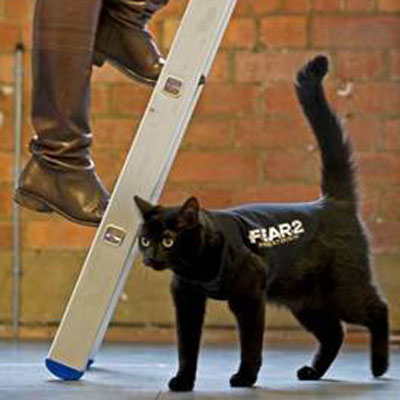
[image: a promotion for a movie titled Fear2. You might still be able to get one of these coats for your cat here.]

Yesterday was a day like a Russian novel for me, full of events and dread, with recovery at the end. Here is the sketchy outline, the events, and some nods to the places I went in my mind.

Kidney doctor in the morning, Tom couldn't go with me. I was pretty sure my recent shortness of breath was caused by further kidney failure. Hoped it was that and not recurrence of my breast cancer. The night before I did some hectic research on accesses for dialysis. The doctor is satisfied with me not going back on it yet, just watching my slo-o-ow trend downward. But he could hear "some whistling" in my lungs, and I had gained four pounds in two months. That could be from fluid in the lungs, what, congestive heart failure? He wanted to order a chest x-ray. We agreed I would call my PCP about it instead.

11:00 Went out and sat in parking lot, called my primary care doctor's clinic and got in with one of the other doctors at 1:15. People take not breathing very seriously. That and no heartbeat. If you want attention in the ER, not breathing is excellent.

Called Tom. Got him just leaving his own pulmonary function tests. (More fear on that later.) We agreed to meet at home and make lunch. He offered to drive me up to PCP. I felt gratitude, and thought about the pleasures of marriage in old age. I had no idea when I was young.
Breathing raspy now. Pneumonia. Maybe bronchitis. Hoped it wasn't the antibiotic resistant kind that kills people.

1:15. Dr. very smart and attentive to detail. Ruled out heart, discussed COPD and emphysema, etc., which can start EVEN THO YOU QUIT SMOKING 20 YEARS AGO! How unfair. He walked me around the hall briskly, thot I did good. Ordered a breathing test and chest x-ray. Went home trying to adjust to the idea of chronic lung disease.

3:30 His nurse calls to say he has revued my breathing test and it is okay. It will be two days to have the radiologist look at the chest x-ray. That's my fault, I'm breathing.

5:00 Couldn't nap. Starving. Worried about my blood sugar. How could I be so hungry? I must be getting diabetic. Eat some leftovers. Something wrong with my friend G's phone. I try her cellphone, leave a message.

7:00 I am definitely either manic or depressed, hit by a crazed desire to cook a creamy pasta dish with Tom's help, substituting bacon for pancetta and so on, using some frozen peas that were used as an ice pack on my ankle back when. We play Iron Chef in the kitchen. It's really active and the food turns out good.
~~~~~~~
I am not a reader of Russian novels myself. I just know they have a reputation for being very long. I assume most of that is not actual action, but people thinking and feeling. The subjective, as in the deep exploration of the fears highlighted above. It did seem like a long day. And all those fears were real, if temporary. Even then, it was kind of funny, like, What now? Watching myself as one of those farces where people dressed in ridiculous clothes keep bobbing their heads out of doors and hiding in closets.

Oh yes, in with all of this, it was a beautiful sunny day today, one more in an improbable string of them. I hope yours was better. And now it's time for the weekly taking out of the trash. Garbage. I mean plain ordinary actual tangible garbage, which would really smell bad by next week. Kind of thing you have to do if you're alive.

Tuesday, August 18, 2009

Happy End of Day

[image: End of Day glass]
I certainly prefer birth over death, beginnings over endings. A baby is fresh and new, a delight of potential and surprise. Old age, sickness, and death are so sobering. Yet, many Buddhists work with that. I believe it was Issan, a Buddhist abbott, who started the first hospice, when the AIDs epidemic hit California, and no one knew what to do. Buddhists find hospice work fulfilling, as do many people once they have served as caregivers for a spouse or parent. Facing death, we are more sincere, we are leveled.

In my church, memorial services often glide over the hard part and emphasize the joys of the person's life, before he got so sick, that is. It is a celebration. Yet I remember one service in which people spoke about the dead woman, Lisa, her eternal youthfulness, and at last one man got up and said, "She did not remain herself to the end. That was the tragedy." I knew that, too. I had visited her in her locked dementia ward. She had been dressed well, and sat on an absorbent pad on the bed, smiling, pretending to know us. She was not herself anymore. I appreciated that man's honesty. He loved her.

As I understand it, it was encountering the realities of end-of-life that led the Buddha to leave his home and search for some consolation. It took him a while, years of traveling from one esteemed teacher to another, learning what they had to teach, meditating, doing all sorts of rigorous spiritual practices. What he came up with was - Life is hard. Very unsatisfactory, say. Because in every single birth, death is implicit. All living things mature and die. Our problem, the Buddha said, is our endless thirst. Our craving to not have life be the way it is.

You sure know about this when you end up like me, limited by a mortal illness our medical system tries hard to defeat. Beyond "lifestyle" treatments, kidney failure can be addressed only by dialysis and transplant. Both are crude, painful, elaborate and expensive treatments, but dialysis is worse, and is usually low yield in terms of restoring health. So we thirst for that magical transplant.

I had to stop there the other day and examine that. This is one reason we meditate, to go deeper with ourselves, until we face the strength of our cravings and our unrealistic delusions. Transplant is not in fact so magic as all that; the real story with Cinderella is that you might marry the Prince, but you will still have to sweep up the ashes of life, metaphorically speaking. Our lives don't stop at the beautiful waltz of the beginning.

Going deeper with myself these days I realize how I crave healing, how I want to believe there is - or will soon be - a treatment that will give me back my life - the energy of middle age. Or at least, more years with more good days. I have an alternate craving: to forget the whole thing and just accept quietly dying; that is a choice a kidney patient can make.

Lousy alternatives. Realizing this yesterday, I went about doing my laundry yelling fervently, "Don't want!" That assertion was one of the first things my grandson learned to say, and as a toddler he could say it ferociously. "Don't want!" Of course, Don't Want is as much a craving as Want.

I came back from a Memorial Service the other day with an index card on which I had written,
There is no happy ending
to an individual life.
So, what is going to console us?
Zen says the answer is to sink deep into that truth. Accept it. I guess that is the Right Understanding piece of the way of life the Buddha recommended as our consolation, what is called The Noble Eightfold Path. Ah, so, I hear my sister-in-law say. It comes down to that after all. Where is the consolation of right livelihood, of not taking what is not yours, of kind speech? This hardly seems appealing compared to a party, or a transplant.

The image I put up today is End of Day glass. If you click on that phrase, it will take you to a site that describes this accidental art, which makes beauty is made out of the leftover scraps. That seems a very nice idea to me. Consoling, in fact.