Showing posts with label Master Sheng Yen. Show all posts

Saturday, January 22, 2011

Following the pathless path

Jizo in the snow, photo by Tom Tucker
This morning I read Open Buddha's review of Footprints in the Snow, an autobiography I also like, and noted that Sheng Yen wrote a book on the Chan form of koan work.  My first response to this news was, I'd like to get that.  Next, I remembered that I have mostly lost interest in formal koan study, which was very good for me when done with Ama Samy, whose method is unique, and good for me in altogether a different way when I worked with Daniel Terragno, whose traditional method was guaranteed to arouse my striving and thus my frustration.  There's a book in that sentence.

Koan work appealed to that in me that longed for mystical, intuitive engagement with the truth.  In fact, the beginning of my work was in a dream after I got home from my first retreat with Ama Samy, one of whose books is titled after the koan, Why did Bodhidharma Come from the West?  I dreamed a deeply felt answer, woke up briefly to write it down that night, and the next day wrote to him about it.  This was in 1999.  He wrote back to me with another koan, "Who is that one?," and I carry that koan to this day, realizing more all the time that this one is compiled of a thousand thousand bits that shift constantly - the truth of no fixed limited self.

During the years that I worked with Ama Samy while on retreats, I also worked with the first book in the Japanese tradition, The Gateless Barrier.  I worked with three copies of it, in fact, by three teachers, studying each koan hard, thinking about nuances.  I embraced this study gladly, finding it much more fulfilling than the graduate studies in literary theory I had recently completed.

It made its way into Zen-flavored humor written by Sherlock, my cat, which I intended to collect as The Sound of One Paw until I got felled by one real-life koan after another.  I also read and reread John Tarrant's marvelous collection, Bring me the Rhinoceros.  In all this, each koan worked its way into my mind.  It's something Tom and I share in that intimate way of the long-married, casual references to something we both did and that we understand.

Well, this is a shorthand description of a few years of journey.  My interest in koans tapered off - I couldn't say when.  At the time, I felt like I was failing.  But now I notice that I carry all those koans, and they often pop up in response to some event.  My practice has become more flexible, is changing all the time.  I'm about to pick back up yin yoga, taking advantage of Lulu Bandha's online site, recommended by the best and most generous yoga teacher I've ever known, Kit Spahr.  I am again interested in poetry, writing my own, reading others'.  On retreat, I was very moved by the visible world, and took photographs, including a sequence of a sunrise and one of a sunset that I'd like to turn into mini-slideshows and publish.  And, well, going to the health club - I have never been attracted to exercise - is a way of recognizing the basic principle of cause and effect we call karma.  Practice is all over the place, if you think about it.

I suspect all serious practitioners think deeply at times of throwing over the householder's life and entering residence, spending more time on formal practices like meditation and calligraphy.  I don't, anymore.  I'm too bonded to Tom, my neighborhood, my home, my church.  Besides, I'd drive them crazy.

Tuesday, September 7, 2010

No comparison

Do not concern yourself with anything going on around you. Nor should you be concerned with anything going on inside yourself. Focus fully on the method and do not make external or internal comparisons.
Sheng Yen
In this talk Chan Master Sheng Yen was focusing on how to sit in meditation with a group, especially during a retreat.  The sentence I have italicized made me think, though I also know what it was to be concerned about others, especially on my first retreats.  


I suppose wandering eyes alleviated the stunning boredom of my first retreat.  I watched the head student, John - how could he sit so still for so long?  My attention went to my own inadequacy, then to my serious back pain, then to the guy who had flouted the rule of dress ("Nothing with writing on it") and was wearing a tee-shirt that said Kiawah on it.  What was wrong with him? I must have read that word a hundred times in the course of walking meditation on that lo-o-ong first weekend.  Kiawah, whatever that was, was wildly distracting.  I read the rules and killed myself trying to follow them, so why wasn't he like that?  Was he a student of Zen or not?  Why was he allowed to get away with it?  John should say something to him. Why was I so critical?  Why did I always follow the rules?  And so on.  Elaborately.


On some level I knew I should restrain this comparison to John and Kiawah.  But I did not know that I should (and could) also let pass the rich universe of reactions that was going on inside me.  My sensations, my pain, my self-criticism, my boredom, my strong desire to leave.  


And I did not yet have a good grip on the method.  No one had told me to count my breaths to ten and start over, a strategy some teachers think is essential for the first fifty years of practice.  I thought I should "follow my breath" but I was new to this, and not very good at noticing when my mind strayed.  Jack Kornfield compares this early phase of meditation to training a puppy dog to use the paper, gently but firmly.  My mind was more like a litter of kittens.  It is useless to try to herd cats.


But all this stuff is not confined to meditation.  It goes on constantly in everyday life, doesn't it?  External comparison.  We look at ourselves in a mirror and compare our nice, soft bodies to the airbrushed bodies of anorexic models and movie stars.  "Fat," we think.  Or we envy someone else's promotion or big house or hot car.  Internal comparisons and self-analysis.  Why do I this and Why don't I that. 


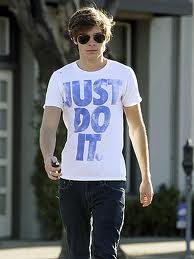
The method in meditation is one thing; the method in the kitchen or at your desk or in your car is quite another: just be aware.  Just do what you're doing.  Maybe a Nike tee-shirt it would help.  You could always wear it on retreat.

Tuesday, May 4, 2010

Getting a transplant call

The way it went, I came home from a very calm afternoon, visiting with Marian in her back yard and then helping spread the money around by getting my car washed and vacuumed - it's still only $13! Then wandering the gardens applauding the first rhododendron blossom, watering the chives, which are in a pot to keep them in hand, and so on. Tom had been working in the garage while I was gone and we both went in at the same time. Going down the hall he said, "There's a phone message. No, two messages.

The first one was from Amy at OSU Transplant. My heart rate accelerated as I wrote down the number. The second message was from Karen, another friend. I wrote down her number, though I already have it in my cellphone, thinking, God, Amy's message came in over an hour ago. You only have two hours to reply to a transplant call. Then they go on to the next person. But surely they would have called me on my cellphone. Wait, I'd left my purse in Marian's house, and wouldn't have heard it. And Tom didn't have his cell in the garage. I ran into my study and put on the headset I use to talk on Skype, where I can hear clearly. Figured out how to put in Amy's number.
Hello.
Hello, Amy?
No, this is Karen.
Oh, Karen could I please talk . . . Wait, is this Karen?
Yes, Jeanne?
I had inadvertently mixed up the phone numbers and called Karen.

I hastily explained that I'd had a call from transplant, and I should get off and return it right now, and then call her back. I don't know if she understood, but she acted like she did.

Now, you don't want to hear the rest, and I don't want to write it. I tried four times to get through to Amy on the number she had given me. Keyed it in wrong, and etc. and so forth, as they used to say. The more I did this, the worse I got. Finally I breathed in, closed my eyes, and said, Maybe I have her number on my cellphone. I galloped down the hall to get it. And connected at last.

And of course, it was not about getting a kidney - I've only been on the list a little over two years. The average wait is three years, but some people wait six, and some people die. It was just about scheduling an annual followup with a surgeon. They want to make sure you can still "qualify" for a transplant - i.e. look like a good bet to survive this major surgery and take your anti-rejection meds. They will ask again if I have a living donor, as if I could have one and not let them know.
~~~~~~~~
Strange. I am just finishing Footprints in the Snow, the autobiography of Chan master Sheng Yen, and learned that he died of kidney failure at age 80. It's said that he turned down the opportunity for a transplant, saying it should go to someone younger. Well, yes. He was 80, while I am only 67. And he was enlightened, so advanced that he was ready to cast off this mortal shell. Here is his beautiful death poem:

Busy with nothing, growing old.
Within emptiness, weeping, laughing.
Intrinsically, there is no “I.”
Life and death, thus cast aside.

Wednesday, July 15, 2009

Reading about enlightenment

[image: Designed by Dutch firm Studiomeiboom, The Enlightenment illuminates your shelf rather your soul. Made from plexiglass and lit by an energy-saving bulb, the lamp plugs into an outlet with a standard cord.]

from Chan Master Sheng Yen, Shattering the Great Doubt -
[B]odhisattvas and lineage masters appear in the world, using countless ways to expound the doctrine, using all sorts of expedient means. What the lineage masters say is not actually Dharma, since the Dharma itself is not expressible in words; they are only expediencies to help people.
The Tao te Ching -
The Tao that can be spoken of is not the eternal Tao.

W. B. Yeats -
Like a long-legged fly upon the stream
Her mind moves upon silence.

Friday, February 6, 2009

The Great Matter


Busy with nothing, growing old.
Within emptiness, weeping, laughing.
Intrinsically, there is no “I.”

Life and death, thus cast aside.

Above, the death poem of Taiwanese Chan Master Sheng Yen. I just learned of his death on February 3 from the blog "In Pursuit of Mysteries." The link attached to his name leads to another blogger's review of his autobiography, which has the wonderful title, Footprints in the Snow. And the poem - "Busy with nothing, growing old" - certainly speaks of ordinary life as I know it.

The death poem is a tradition among Zen masters. It expresses their acceptance of the truth of all organic life: it is (we are) born and dies, and transforms into other life. My husband Tom, the physicist, tells me that sometimes instead of trans-forming, organic life can fossilize, that is, turn into a mineral. There's a metaphor.

What's all this resistance to dying? I feel it within myself. When I learned I had cancer in 1997, I fervently didn't want to die of that. Later, when my kidney function fell so low, I sincerely didn't want to die of that. I, I, I. I haven't figured out what I do want to die of, but I know I'd like it to be slow and comfortable, on clean sheets, and not today.

You can hang on to life because it is a good time, a party you don't want to leave, an interesting conversation. Once, leaving Deb and Karl's annual fall party, we found ourselves under a clear, starry sky. Straight from the bluegrass jam into the vast, beautiful universe. I thought, This is what a good death would be like. It might not be like that, I don't know. But I think it is important to leave the party willingly, having been immersed in the rhythm, having had a very good time, and knowing it's time to go