Wednesday, December 31, 2008

Without going out of my door
I can know all things on earth.
Without looking out of my window
I can know the ways of heaven.

Tao Te Ching

Monday, December 29, 2008

Getting on the Transplant List

Clearing out the inbox, I found this long post I had sent to friends last February. It gives an inside view of the process. Yes, I am still on the list.

Dear Friends,
I am writing to those who have expressed interest in my health to let you know where things stand for me. Yesterday I took the very last test for my application for the kidney transplant list at OSU. Chest x-rays, a simple test that had been overlooked till then. It went well, and was a good deal more pleasant than the three sticks required to take eleven (yes, 11) tubes of blood, the PAP test (at my age!), the adenosine stress test Monday that left me radiant – that is, full of gamma rays – and meant I couldn’t have any coffee for 24 hours. No coffee, that was the hardest part.

A couple of weeks ago, having completed most of what was required to begin applying (copious forms, complete medical history, letters from oncologist, family doctor, dentist . . . mammogram) Tom and I went through the all-day interview. This involved no lunch and no rest for the weary from watching scary videos, and undergoing very long interviews with social worker and nurse, and a short interview with The Transplant Surgeon.

“Do you smoke? How long did you smoke? When did you quit?” Every single person asked me those questions. Happily, over and over I told them I quit 20 years ago.

And now we wait. Monday the nurse assigned to me will present my file to the Big Guy, who already told me I looked like a good candidate. (I cried.) Wednesday the transplant committee meets to decide who gets a chance to play the roulette wheel of The List. (It won’t be a smoker, I suspect.)

It will be someone who is likely to live through the surgery, who is healthy and determined enough to “take the graft” (have a kidney attach and go to work). Who will continue taking the very expensive meds the whole rest of their life, despite side effects, even after Medicare stops paying. Someone they believe will be “compliant,” get their routine blood tests, take their vital signs every single day to catch a rejection syndrome early.

If all this sounds too difficult, it’s nothing compared to dialysis. I know from experience. And the thing is, with a successful transplant (about 90% are) not only do you live, say, six years longer, six years, but you feel like a human being. “Quality of life,” they call it. Just one working kidney is all you need to climb Mont Blanc. Once I am on OSU, it will be comparatively easy to get on the list at other hospitals, which increases my odds of getting a kidney. Meanwhile, I have a few days of freedom.

Getting on the list means you become maybe #250 of the type O blood kidney patients waiting in line. When “a kidney comes in” tissue matching starts with the first person in line. If you are “a good match,” you are called. You might just be the backup person, but you go to the hospital and get prepped, in case. The call could be next week or ten years. The average wait for a type O cadaveric kidney on this list is three years.

And to get it you have to answer the phone call. It starts there. That’s why I say I feel free tonight. For five more days I don’t have to carry a charged cellphone everywhere I go, and always answer, day or night, no matter where I am. I don’t have to be packed and able to get to OSU within about six hours. Heck, tonight I could fly to Paris, if my gamma rays didn’t set the machines off. Once I am on the list, no more European weekend junkets. Darn.

For five more days I’m not waiting, hoping, fearing. I can just sit here with my pretty low kidney function contemplating dialysis and sketch the cat’s ears. I am free from the all-consuming work of application, and free from the penalties of success. To tell you the truth, it feels close to bliss. Like that moment after you take the last exam, but before you graduate and actually start to work.

I’ll be in touch. My love to all of you who have asked and cared about this trip.
Jeanne

Sunday, December 28, 2008

Resting in economic chaos

This morning I am fascinated by a NYT article by Michael Kimmelman, "Printing Money and its Price." He explores the opinions of various learned people on the wisdom of the Fed doing exactly what got us in trouble:
Spend without limit. Print money today, fret about the consequences tomorrow.
Kimmelman, who is an excellent writer, is enough of a thinker to avoid reaching a conclusion. The article as a whole demonstrates how untidy all this is, and how unpredictable. That made me think of chaos theory.

I understand chaos theory only in its practical application to forecasting the weather, which cows seem to do more reliably than meteorologists. Weather is affected by forces both large and small (those butterfly wings in Peru), and constantly changing; and when just one force moves, it moves everything in the whole net. We can't always forecast it; otherwise there wouldn't be so many deaths from major weather events. And we certainly can't control it.

I suspect the economy is very much like that. Very large forces, Bernie Madoff, Chinese central bank, small forces, you not buying that flat-screen TV, very small forces, someone wrapping a sandwich in an old bread bag, avoiding the purchase of Baggies. Actions happening all the time everywhere.

Like many American Buddhists, one of the first dharma books I read was Pema Chodron's When Things Fall Apart. In this book, with the clarity of a former elementary teacher, Pema encourages us over and over to stay with our uncertainty. Little we know at the start of practice that this is going to be the essence, resting in reality, letting go of our attachment to the outcomes we prefer, realizing that we cannot control what is much larger than us. For my Taoist friend, this is resting in the Tao, the way things are. Suzuki Roshi called it seeing"things as it is."

I think that's where we are as a country and a world now, as the reckless errors of frontier capitalism fly home to roost. We are in chaos.

What do we do with that? As governments, we seem to be trying very hard to fix it. There are learned opinions all over the place on how to do that, and no one can say with authority that this action or that will work. So I'd like to add my voice to this, and recommend something you could think of as a middle way: Let's not try to fix it today. This thing is a giant ship that has exploded, and the planks are still falling through the sky. Let's wait a while.

To carry the metaphor forward, this is not a time to hover over drawings on how to rebuild the ship and argue about what kind of ship it should be. We need to be concerned right now with rescuing the little folks in the water before they get swamped. And perhaps, meditating on the life koan, How did we get into this mess?

Saturday, December 27, 2008

Any Comments?

[photo: an art print available from easyart.co.UK]

You know how the NY Times publishes on page 2 these careful, finagling corrections of, usually, the mispelling of the name of a less-than-famous person? I haven't had to do a correction yet. I get very few comments; several women have told me they couldn't figure out how to use the "comments" feature. I have made that easier, and tried it myself on my previous post, posting as Anonymous (for those who don't have a URL) but signing my name.

So here's my self-correction: On August 22 I posted "The Women's Fault!!!," which verges on being a rant in response to a post by a man who observed that there are almost no female Buddhist bloggers, and it's their own darn fault. I pointed that millennia of oppression made us like we are. I didn't like his attitude.

But the broader truth is that it's true, we women have been scared of technology. Maybe we haven't been encouraged to develop that part of our minds. In any case, my friend Gini is the only other woman I know who really loves to play on her computer, which is what they are so good for - the best toys ever. We talked about that the other day - why are women missing out on so much fun! - and speculated that maybe we women are afraid to look smart. Historically, intelligence has not been seen as one of the feminine virtues. Think of the older women you know who leave the whole political thing up to Daddy.

An interesting image came to my mind, of Pam, who comes once a year to inspect our house for termites, and once took out a hornet's nest for us. She is a woman in her thirties with a career in pest control, a job no girl I knew would have dreamed of before the feminist revolution. A brave job, technical and somewhat dangerous. What interests me is not just that she does that for a living, but she does it perfectly groomed, her blonde hair in place, her makeup just right, wearing pretty earrings above that masculine uniform. She seems to prove a woman can do "man's work" and still be feminine. It makes you think of the oft-repeated observation that Ginger Rogers did everything Fred Astaire did, but backwards and in high heels. If she can do that, you can start a blog.

Friday, December 26, 2008

Year-end review

The year-end review mentality should not be indulged for too long, just long enough to save everything in your inbox in a separate folder titled 2008 year-end, a trick I learned from my daughter, Cassie. There are endless rituals you can use to close out the past; you could throw away all your unmatched socks, though honestly, I wouldn't advise that. You know what will happen if you do.

I find myself thinking sadly of a friend's bad karma, some mental disorganization that may be the result of years of enjoying that harmless pleasure, marijuana, which affects the frontal lobes. Or my own bad karma, the various actions that chipped away at my kidney function. To say nothing of the stock market, or the months wasted on stupid diets.

There is some benefit in reviewing the behavior that led you here - maybe you will change your low-down evil ways - but it is a limited benefit, since the past is only a fiction in your mind (and, you hope, not displayed on the internet).

Truth is, as we grow older we can't help but think of things we would have done differently, had we been born wise. Hindsight. Ouch. A teacher once told me, "You might have to go there, but you don't have to stay there." Foresight is somewhat more useful, though nothing ever turns out the way you imagined (the future is a fiction, too, a dream).

Much more useful is, what to call it, one-sight? seeing what you're doing now. The only moment in which you can take action. Which leads me to get dressed and go to the health club.

I think I won't say Happy New Year, but Happy New Moment.

Thursday, December 25, 2008

Christmas Thaw

Mild moisture against your cheeks.
December, gassing up for the trip,
coat open, without gloves,
enveloped in gray sky.

The past is entirely present
in the smell of gas,
the spot of rain on your glasses,
no rushing, only standing
in this tranquil windless day,
preparing, in no hurry.

You have told this rosary
years without end, countless beads
slipped through the hand,
memories melted
in Decembers' warmest days,
in a scatter of drops
from a nothing-special sky,
the high stars invisible
in the even morning light.

Jeanne Desy, 1999

Wednesday, December 24, 2008

What is past and passing

[Snow on Screens, photo by Tom Tucker]

I had an odd feeling/thought yesterday. Waiting at the acupuncturists office, I looked through Time Magazine’s 100 most influential people of the year (not all men - I suspect it once was). It was from May. Tim Russert was still alive, and Obama just one column. More, there were big ads for big expensive cars like Dodge Rams. And one finance ad that said something like “Have you earned so much money you don’t know what to do with it? We can help you.” It was as if that was an old world that had completely disappeared. Is that what the past really is, always?

I didn’t think that at first. I just felt small and isolated in my small, quiet world, so far from that busy, accomplishing world that one of us must not really exist. It seethes, roils, everyone trying to change things that change themselves every moment.

Here, on the other hand, is an old poem I first read when I was in my twenties. I remember how it brought a sense of mystery and depth to a life that had very little of either.

"The Oxen" was first published Christmas Eve 1915 to an England involved in trench warfare and scientific rationalism. The belief that animals actually knelt at midnight on Christmas Eve was still widespread. (These were the descendents of the animals believed to be in the stable when Christ was born.) One scholar says Hardy "must have felt like a remnant from an earlier age of faith as the great war raged on, sweeping aside the works of hundreds of years of history."

A few words are unfamiliar; "barton" (a farmyard) and "coomb" (a valley between steep hills) are regionalisms that would have had an archaic feel even in 1915.

It is interesting to me that one scholar believed he had identified the actual barn Hardy was thinking of. The simplicity and reality of that takes me back to that calm, non-accomplishing self in the doctor's waiting room, as well as to the solid sweet-smelling miracle of a baby's birth.

The Oxen
By Thomas Hardy

Christmas Eve, and twelve of the clock.
"Now they are all on their knees,"
An elder said as we sat in a flock
By the embers in hearthside ease.

We pictured the meek mild creatures where
They dwelt in their strawy pen.
Nor did it occur to one of us there
To doubt they were kneeling then.

So fair a fancy few believe
In these years! Yet, I feel,
If someone said on Christmas Eve
"Come; see the oxen kneel

"In the lonely barton by yonder comb
Our childhood used to know,"
I should go with him in the gloom,
Hoping it might be so.

Tuesday, December 23, 2008

Headache cures


A friend of mine I will call Tigger has a hard time with high and low moods, and with sleep. Over the years he has been tried on all sorts of "cocktails," mixes of medications. I remember recommending melatonin taken when you're ready for bed and propped up with a calming book; it works for me as long as I turn the light out on the second yawn (it's possible to override it). But it didn't work for him. Nothing did. He slept intermittently at best, and almost always woke up with a headache.

Recently, a doctor noted how low his blood pressure runs, 90/60, and recommended he increase his salt intake. I know from experience that BP that low makes you feel tired; when I had that, I got dizzy standing up, or just rolling over in bed. Tigger is trying this treatment, and reports that his headaches are diminished. He thinks it makes sense that the brain needs adequate blood flow to dream and refresh during the night.

Increasing salt is not for everyone, not for me, for instance, with kidney disease, and no one should do it without knowing how their BP runs, and monitoring the results. I'm not writing to recommend this treatment, but to point out how very individual we are, with our own unique set of sensitivities and needs.

And slso to note that "holistic health" is not just a catchphrase. We are intimately connected with ourselves, you might say. Every part of us affects every other part. The way to stay healthy is to know ourselves, our personal needs, and how we are affected by other people, weather, foods, exercise - everything. And it is true that no one else can know you as intimately as you can know yourself. That's why no one else can heal you, though there are many ways to provide comfort, nourishment, and encouragement.

There are various ways to study the self, including medical tests and keeping a daily health log (which Andrew Weil recommends). And there's meditation, the kind we call zazen, in which we simply sit with and enjoy our breathing, our sensations, and thoughts, paying attention to ourselves like loving parents. This has led me to the best treatment for my own headaches, since a kidney patient can safely take very few drugs - patience. This too will pass. I have learned that my headaches often (not always) just step in for a short visit, and then, like so many of our demons, move on.

Monday, December 22, 2008

Slow down and listen to something besides Christmas music

Times really have changed. Recently the NY Times published an article on "Cabbage - An Inexpensive Nutritional Powerhouse." I'm getting the strange feeling that I'm coming back in style. The recipe looks good, but they left out the keilbasa. (More on my childhood in Youngstown, Ohio some other time.)

Saturday, December 20, 2008

A Christmas Memory

Every day's a bad day in an alcoholic family. Yet, my Christmas memories include some joys.

What made joy possible was that at Christmas, my father relaxed, deeply and in some indefinable way. A smart, good-looking veteran of World War II, he would today be diagnosed with post-traumatic stress disorder; he was hypervigilant, inappropriate, and habitually abusive. But at Christmas he touched down for a while into the place that is represented in the movies by soft, golden light.

This transformation was signalled by his purchase of a couple of pounds of mixed nuts in the shell, which he enjoyed cracking and picking in his easy chair, and a five-pound box of Brach's mixed chocolates. I don't think he ever knew gourmet chocolates existed; maybe he remembered Brach's from his childhood, when it would have been a great treat. He was born in 1920 to a steelworker who eeked out the family income by raising vegetables and pigs. When storebought ketchup came into the house, he and his brothers would fight over it, and drink it all straight from the bottle.

Like many children of the last great depression, he was obsessively uncertain about money. Thrift was automatic. But at Christmas, that relaxed, as if he temporarily stepped into enlightenment, into the reality of our middle-class prosperity.

We of course put up as large a tree as the front room would hold, and hung it lavishly in just a certain way (three strands at a time) with tinsel that was saved neatly year after year. It was always topped by a simple, rather ugly star. He strung more lights across the valance of the draw drapes, all this with much swearing and people tiptoeing around the bad mood that was habitual when he was working. It must have been after all that effort that he could count the job done, and come home with candy and nuts and relax into a sense of being on vacation.

It didn't seem to have anything to do with Christianity. I never saw any sign of him caring about religion until after his death, when I found an old poem on his desk, "Crossing the Bar." It speaks about the hope of meeting God after dying. I don't suppose he ever thought he met God while he was alive. He wouldn't have thought of his Christmas happiness that way, or of his joy in buying generous gifts at the last minute as being a virtue, the way we talk about the practice of generosity in Buddhism. It was fun. It was "taking it easy for a change."

But it was more. The other place one might see him in a similar mood was at "the farm," a large piece of hilly acreage he bought as soon as he could afford it, as a place to go camping and eventually build a pond and a cabin. Nature does that for a lot of people, even those who are disillusioned with organized religion and everything else about human society. He probably experienced it as soothing, comforting.

On the farm, which was 240 unfarmable acres, there were places he could stand and turn, and everything you saw was his. Not even a fence in sight. He died there alone in 1997, of a massive stroke. Rather than imagine that, I like to remember him as he was in his forties, relaxed and expansive in his armchair, an Old-fashioned at hand, cracking walnuts so they came out in two perfect halves.

Friday, December 19, 2008

A Village of One Hundred

Royal Ontario Museum

My friend Tom Barlow and I sometimes end up on the same page, though you could say he is sci fi and I am fantasy. I applaud his common-sense approach to economics, reflected in this blog entry.

For some time now I, too, have been thinking about how we as a society spend money without really making choices, without realizing that we have limited resources, and that every dollar spent is a choice not to spend it on something else. My own model for bringing it down to earth is to imagine I live in a village of just 100 people of ages and abilities. Now: are we going to give a very old, very sick man dialysis to keep him barely alive for one more year ($60,000, or more), instead of using the money to give everyone in the village basic preventive medical care? That is what we do now. Medicare covers it.

That we are making these choices is not clearly visible to us because of the scattered, privatized nature of our medical care, but also because of our frontier ethic - There's plenty, and whoever gets there first can grab it. Our spending is not done by priority, but by the tussles of power and influence. Medical care is is only an obvious example of the randomness and unfairness of our spending, and I say it as a member of the well-insured privileged class.

The Great Awakening™ (as I have come to think of the amazing sea change we're in) is causing more people to think about these things. Yes, the brown-winged moth is interesting, and every living creature is important, and I'm glad someone cares deeply about it; but I am not willing to sacrifice ten children's lifetime education to study it. And there doesn't seem to be enough money right now for both.

The virtue of imagining A Village of One Hundred is that it is a small enough group that we can imagine real people. Make it an international gathering, and you can see even more clearly how recklessly resources have been distributed. Over here is a child with cholera, whose life can be saved by inexpensive hydration. Are we going to watch her die while, in the village square, we are busy knocking down a useful building to replace it with something newer and grander? I think even the most ardent patron of architecture would not want that. But it is the sort of choice we've been making.

Thursday, December 18, 2008

Very satisfactory vices

[video: a Rhoomba and a more cooperative cat than Sherlock]
I have to accept it - I can't write while the robot is vacuuming, anymore than I ever could while a more sentient creature was cleaning my house. It isn't guilt that bothers me now, it's just that the darn thing distracts me; that is, I am so distractible. So the Roomba is shut off for the moment.

It is a tool I bought myself to make housework easier, or at least possible. I could tell you how it is that Tom and I, considering our disabilities, really should not be vacuuming. And that's true. But like so many tools, it is at least half toy. And in my world, playing tends to qualify as a vice.

For some time I have been studying with fascination a talk by an unusual Zen Master named John Tarrant. I feel connected to John because I studied for a while with one of his students, Daniel Terragno. Also, he is a poet. Here is the paragraph that interests me:
Athletes are trained to not get interrupted by their scenarios. Otherwise if someone insults you on the field, you lose your game, and what’s the use of that? Another example would be for a disabled person to say, "I am disabled so I can’t do anything, my life is over." Even though you may have plenty of data points to back it up, that is a scenario that won’t help you. Without that thought-world you might find that you can be disabled and develop plenty of very satisfactory vices and live a rich, complicated and difficult life.
from The Moon Sets at Midnight
Well, this is me he's talking to. Disabled by advanced kidney disease (not my fault!) when friends my age are still working and traveling and doing their own vacuuming. But this being a blog, I'm not going to explore the entire paragraph right now, not even the vital last words; just the surprising part I italicized. What is this? a spiritual teacher recommending vices? I looked up the word.

"Vice" is not necessarily downright evil, or social transgression of the sort vice squads and some churches deal with. The word is also used to describe an imperfection, a frailty, a practice considered immoral by your society. But it isn't society whose judgment I have to fear these days, since I am free of the workplace and its demands for respectability; it's my own. I learned as a child to consider all sorts of things weaknesses. So it was with pleasure that I read in another one of John's talks that his students often tell him he's fat, and he admits it, no problem. His photos show a man who likes to eat, and enjoys wearing a great hat.

Zen attracts a fair number of skinny, serious people who like to dress in immaculate black, and are convinced Zen will make them more perfect. I have noticed that the better teachers try in various ways to knock this form of self-imprisonment out of their students, often by just being who they are and fielding the criticism. Sylvia Boorstein drinks coffee, not tea; Bernie Glassman loves pizza; Daido Loori smokes.

Well, I got to thinking about this idea of "satisfactory vices." I am pretty old now, 66, and there's hardly a vice that could do me any harm at this stage, though I have to be careful about elements of my diet or suffer serious consequences. I used to love smoking, but I don't want to take it up again, and I've learned that I can't just smoke one. I'm not attracted to alcohol on a regular basis, or to the way people act when they're seriously drinking. The only effect of pot is to make me really hungry. Drugs to space me out would be simply redundant.

But my imagination was too limited. I already have vices, I just didn't know it. I realized that as I sat here happily in my study, surrounded by a herd of Devil Ducks, a passion I share with my grandson, watching my Rhoomba wander around the room. Yes, I have a vice, maybe the worst possible thing my parents thought could happen to me: I don't like to work. I like to play. My father called that being lazy.

When I have work to do, I work, always did, and there a certain inherited perfectionism comes in handy, if I don't let it take over. But when I don't have to work, I don't go find something useful to do. I blog . . . play on YouTube . . . watch DVDs of A Touch of Frost . . . sit around and read the Times . . . visit with friends . . . write poetry I don't bother to send out. And that somehow tempts me to end with one of my favorite poems, which makes a very good case for being lazy. Maybe it's really called "living."

Lying in a Hammock at William Duffy’s Farm in Pine Island, Minnesota
by James Wright

Over my head, I see the bronze butterfly,
Asleep on the black trunk,
Blowing like a leaf in green shadow.
Down the ravine behind the empty house,
The cowbells follow one another
Into the distances of the afternoon.
To my right,
In a field of sunlight between two pines,
The droppings of last year’s horses
Blaze up into golden stones.
I lean back, as the evening darkens and comes on.
A chicken hawk floats over, looking for home.
I have wasted my life.

Wednesday, December 17, 2008

Men, women, and giving

I often think of the real (though, of course, general) differences between men and women, and of how urgently we need to elevate the qualities of the feminine. One of those is not making war. Another is nurturing, feeding others, which I think is a feminine quality that goes deeper than socially conditioned roles. Today, a little story in The Urban Dharma Newsletter in my mailbox struck me as almost amusing, because it illustrates the difference, though not to say anything about the sexes. It is making a larger point about how scrupulous piety is no substitute for authentic compassion. Here it is, in my words.

The Bhagavata Purana tells of a time when Krishna's hungry friends ask him to feed them. Krishna tells them, "Go to the nearby temple, where the learned Brahmins are performing an elaborate ritual to attain heaven. Tell them I sent you, and ask them for some cooked rice."

The young men go, bow deeply to the priests and say, "Venerable saints, we are the servants of Lord Krishna. He is hungry and has asked us to seek food from you."

The Brahmins are busy. This is like interrupting Sunday morning service in the middle of the sermon. It isn't done.

Anyway, they are important people, and their lives are scheduled, meditation at certain hours, study at other times, purification rituals. They brush the young followers off. Maybe one of them says, "Come back when we're open. We only do food between the hours of 6:00 and 8:00 a.m. And go around to the back door." Something like that. I don't know whether these young men are homeless, but if they're hungry, they clearly aren't of the same class.

They go back and tell Krishna what happened. He is not surprised. This whole thing is meant to be instructive. He tells them, "Now go to the same men's wives and ask them."

Maybe the young followers are somewhat dubious by now, but you do what the boss tells you. They go to the women. This time their story is, "Lord Krishna is in the neighborhood, and he told us to ask you for food for our hungry group." [So it's like I'm raising money for my high school band.]

When they hear this, the women drop everything, gather huge bowlfuls of the best food in the house, and rush "like rivers towards the ocean" to Krishna, glad to have a chance to give, their hearts full.

Here ends this part of the story. Now, don't anybody call me a femininazi. I didn't make it up. And in any case, bless Christmas. Whatever else is wrong with our holidays, in this season we are sometimes moved to give from a genuine surge of generosity and compassion.

Sunday, December 14, 2008

Who is that?

[Strasse-tiara (rhinestones), from Wikipedia]
This morning I made myself late for church (well, for coffee hour) trying to dress well for a change. Who was that in the mirror, in a sweater that fit, velour pants, a red abstract silk scarf, and mascara, with rhinestone Christmas trees dangling from her ears? I didn’t quite recognize myself. As I coaxed my hair into a barrette and sprayed it, I thought of the ease with which Zen monks get dressed: put on same old robe, shave head twice a week, or not.

What got into me? The Christmas spirit, which peaked yesterday when I learned Devil Ducky Depot had shipped my order, and which led to getting out my Christmas jewelry. It’s wear it now or forget it until next year.

I don’t remember Christmas jewelry from my youth. I have too much of it, though so far I don't have a clever appliqued sweatshirt. The jewelry is something I tend to pick up during brief moments of holiday spirit; you don’t have to try it on. Mine includes a clever handmade cloth elf that hangs on my coat; two small multicolored rhinestone bows, pins; earrings that are red enamel bells with rhinestone tongues; small candle ear studs that tend to turn upside down, making them unrecognizable; and, ah yes, the rhinestone Christmas trees.

They are striking and glamorous, not my usual style. That made them the inevitable conversation opener in Fellowship Hall. When people realized they were staring, they'd quickly say, "Like your earrings."

I found myself replying with a throwaway line: “These are bling from the old economy.” That seemed to remind people what a horribly depressing year this is, yet I kept saying it. The earrings had taken me over, like some scifi horror movie, and were scripting my conversations.

I got to wishing I had worn the red-and-green flannel shirt I found stored in the guest room closet. I paid a lordly $5 for it several years ago, which is a lot of money for a thrift store shirt. It is a very soft, smooth flannel, a Ralph Lauren, which is why it was priced so high. But the little polo pony logo doesn’t seem to bother anyone, and you can have a normal conversation while wearing it. I’m not sure my friends know Ralph Lauren; we tend to be old hippies who ended up in the middle class looking normal, but we really aren’t, inside. Who you really are - that’s always good to know.

Saturday, December 13, 2008

The future of poetry


Finding a Bible in an Abandoned Cabin
by Robert Wrigley

Under dust plush as a moth’s wing,
the book’s leather cover still darkly shown,
and everywhere else but this spot was sodden
beneath the roof’s unraveling shingles.
There was that back-of-the-neck lick of chill
and then, from my index finger, the book
opened like a blasted bird. In its box
of familiar and miraculous inks,
a construction of filaments and dust,
thoroughfares of worms, and a silage
of silverfish husks: in the autumn light,
eight hundred pages of perfect wordless lace.

(from the American Life in Poetry website)

commentary
Before copying this poem, I read over the website's permissions for use, which are much longer than any of the poems, and thought, There will always be work for lawyers. There will, as long as humans gather in groups and as long as there is a rule of law. (I hope never to live in a time and place where there is not.)

Will there be work for Poets? for those who think of writing poetry as their vocation, who cultivate an artist's sensibility, and study and practice the craft. I think that the technologies which incorporate visuals and sound, and the abundance of entertainments, have made poetry an ancient art, as the printed book is becoming an outmoded, inefficient technology. The new depression is going to sweep away academic careerists, and seriously writing poetry will once again become the practice of a very few people who can't help themselves.

Poetry demands so much more of us than a movie. In common with spiritual practice, it demands that we slow down and lose our ambition. Reading a poem, we are listening to another person, entering their experience, taking a brief moment seriously.

So there will always be a profound need for real poetry, the kind not influenced by fads, not easy, impractical as quilting by hand, which is very different than quilting with a machine. Poetry helps us contact our humaness and the truth of our experience. It is not as practical as apples and lawyers, not a survival need or part of the infrastructure that is civilization. But insofar as we want to rise above our animal selves and cultivate humanness, it is equally necessary.

Thursday, December 11, 2008

A politically incorrect moment at our house

[the picture: Otto, serious. He has my eyes.]

This is not just a cute grandkid story, not that there's anything wrong with those. It resonates down through, well, my whole life and political development, given that I was born in the fifties and had seven crinolines in junior high, all of which I wore at once under my circle skirts. So when the sixties came along, bringing feminism in their wake, and I learned that it should read "all people are created equal," that was a very important awakening. The added understanding that women are people passed down in a natural way to my daughter. Oh, but not to my grandson yet.

They were here Sunday to celebrate her birthday. Cassie and I were in the kitchen doing the last of the food preparation, and Tom and Chris were in the living room on the couch watching the Steelers game. Otto (who is almost nine, and loves athletics) got into the frig and found his root beer -- you can count on grandmas for certain things -- and went to the living room.

There he found the recliner empty, so he happily sat down in it (I am now recounting what Tom told me) and put his feet up on the ottoman and balanced his root beer on the arm. He sighed and said, "This is perfect. The women in the kitchen and the men in the living room watching football."

And so life keeps softening our hearts and perplexing us.

Wednesday, December 10, 2008

Observations not worth developing

Sometimes you think you look pretty good, and sometimes really awful. Yet you're the same person. (Or are you?)

Time doesn't really come to a stop when you're in line at the post office. People don't really slow down like bad slow-motion in a TV drama. On purpose. To see if they can find your breaking point.

The Problem the Automakers Can't Solve


[car of my youthful dreams]

In a word, cars are too good now.

The Big Three bailout is so important that David Leonhardt’s column is page one news today in the NY Times (“$73 an Hour: Adding It Up”). Here’s the statement that grabbed my attention:
The real problem is that many people don’t want to buy the cars that Detroit makes.
It is true, and fascinating, that for some decades now, most of us have not acted in our own self-interest. Daily there is new evidence that our behavior, including spending and saving, is nudged by forces unseen. That fact does not surprise the ad agencies. They always sold cars on the basis of appeals to our fantasies of power and freedom and joy, of being someone by virtue of having the biggest, shiniest machine in the neighborhood.

Nevertheless, you couldn’t help but notice that your Honda or Toyota, decently maintained, would run reliably for a long, long time. That’s what a lot of people bought. And that’s what they’ll keep. This is going to add to the Detroit automakers’ problem. They won’t get me to buy a new car, even if they start making good cars, because I don’t need one. My Civic runs great. So does Tom’s Odyssey.

Need vs. want. We keep learning to distinguish. Those of us in the pre-Boomer generations can only be amused when columnists earnestly advise working people to pack lunch (that would be, those who still have work). This advice has been in the Times not once, but twice this week. It's a switch from their usual coverage of how to eat out cheap, that is, for less than $100. In a way, things are looking up.

Monday, December 8, 2008

Since wars begin in the minds of men, it is in the minds of men that the defenses of peace must be constructed.
Unesco motto

Sunday, December 7, 2008

A handmade Christmas

The alert reader might notice that I changed the subtitle of this blog today, back to what it used to be. "The 10,000 Things" is one way Buddhists refer to this reality of forms. "The myriad things" is another phrase. Today, putting out our Christmas decorations, I find myself responding to, loving, things.

First was the little fiber-optic Christmas tree that changes colors in a wonderful way. We bought that after we bought this house, but before we were in it, when fiber-optics were pretty new. I remember so clearly that little store in a mall, the $29 impulse purchase - too much, but we were so happy to have found our dream house.

But the real memory trip came when I finally opened the small box inside the big Christmas storage box.

Over the years I have weeded out the things we no longer used, now that we don't put up a live tree anymore. So almost everything in the big box is something we like. On top, not packed very carefully, but unscratched, were three beautiful chrome candleholders in the shape of different snowflakes, another impulse purchase I don't regret. Like other lucky Americans our age, we have any number of things we like that are always out on shelves and tables, but you grow used to them. These, though, I had forgotten about, and finding them was a thrill.

But the little box was another story. Every ornament in it is handmade, except the sterling silver collectible ornaments my mother gave each kid every Christmas when she worked in the jewelry store. Here was a hanging door decoration that says Noel, green and gold. My mother's best friend, Eileen, whom I thought of as an aunt, gave it to me one year. This would have been in the early sixties, when I was a young mother.

Eileen's life was hard even then, long before two of the kids killed themselves, before she suffered a catastrophic brain injury in a fall: five kids, not enough money, a husband who traveled extensively, an alcoholic family. It occurs to me that I don't know whether she'd ever had any aspirations beyond being a wife and mother. She was a petite and cheerful woman who cherished her Irish ancestry, and did fulfill a dream of taking her father back to Ireland. There she bought a charming traditional costume, which she wore to the Sons of Ireland every St. Patrick's Day. She could do a little easy soft shoe while the band sang "Harrigan" and we all sang along, full of the enthusiasm of green beer.

Eileen found joy in her life where she could. I think now about her sitting those lonely evenings after getting the kids in bed and crocheting afghans, and making this pretty door hanger. Joy and sorrow intertwined.

There are other felt ornaments in that box. One of the happiest years, Eileen, my mother, and I gathered at my apartment to make those. Cassie was three. Her contribution was a mass of felt scraps glued together and placed in a copper scrubber: nestlings, baby birds in a nest.

So many women came to me out of that box. Here are starched cotton snowflakes crocheted by Helga, whom I knew in a cancer support group. Here is a beautifully tatted ornament given to me by a woman in the next office one drab year when I didn't have much Christmas. Here, thirty years later, is a construction-paper Christmas tree with a puffball star on top, signed Otto on the back.

There was something about this, and getting out the bayberry candles and the four different Christmas coffee mugs picked up at various garage sales back when I could still run around on nice summer days searching for wonderful finds. That was a lot of fun, and I'm glad I was foolish when I could be. . . . I started to say, pulling out this box and its decades of memories was somehow stabilizing and grounding. It has been hard to find some shelter from the general anxiety these days. But the box reminded me of all these connecting threads, how we pause for Christmas every year, and how people I loved return through their gifts, friendly ghosts to sit with me for a while by the fire.

Saturday, December 6, 2008

Winter


To the attentive eye, each moment of the year has its own beauty, and in the same field, it beholds, every hour, a picture which was never seen before and which shall never be seen again.

Ralph Waldo Emerson

Friday, December 5, 2008

Shopped till we dropped

Everyone is crazy. You've probably noticed. Your friends forget dinner dates, or show up with no money, lose their keys, don't answer your e-mails. You yourself forget to take your morning pills. The cat just licks up the gravy but scorns the tender slices of real chicken he used to love. I mean, everyone is losing it. All right, it's my personal experience I'm going on, but that's all I've got.
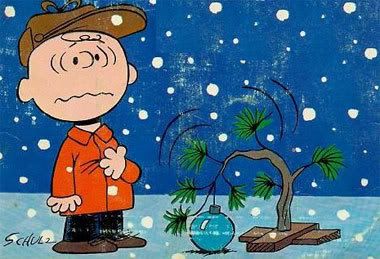
In this maelstrom of anxiety, I noticed something funny today: I felt like going shopping. How strange. Shopping . . . let me stop to define it, girl shopping as I have known it.

By "shopping" I don't mean going to the grocery store or hardware and getting things that sustain what we know as civilized life, extension cords and toilet paper. I mean looking for clothes you don't need. It is a sort of recreation, a way of fantasizing a new, more beautiful self that can take you out of drab reality for an hour or two.

I once worked in a place that had a significant culture of shopping. It was a research facility that employed quite a few bright women in support positions, project assistants and the like. Many of us had advanced degrees, and were capable of higher-level work than we were assigned. And these were the days of double-income. So at lunchtime, we often "went shopping." You just fell into it, the way you get in trouble when you hang out with the wrong kind of people.

I remember the lead shopper, a bright woman and a sharp dresser, saying once that the reason she liked shopping was that it gave her a chance to use her analytic mind. On that particular day she had come back from lunch with a rayon leopardskin print skirt. You could dress it up or down. It was very expensive, but washable, and given the versatility . . . That was the kind of conversation you found yourself in back then, before you had a spiritual practice.

While I am telling stories, I want to mention my Aunt Whoshallremainnameless. A lot of people have an aunt like that, whose idea of a wonderful time is going with her girlfriends to the outlet malls for the day. When her daughter cleaned out this woman's estate, she found forty pair of slacks on hangers, tags still on them. She didn't understand it.

But I do. Shopping is therapeutic. I thought that was common knowledge. What did the little sign posted over the secretary's desk say? When the going gets tough, the tough go shopping. It was like a credo.

And what's happening now? Very few people are shopping like that. On Black Friday, people went in with lists and budgets, and bought only what was on their list and heavily discounted. That's not really shopping. That's work. Shopping was about following impulse. It was fun.

No wonder we're all crazy. Here we are, under all this stress, the whole concept of the economy blown sky high, even Warren Buffet is losing money. And at the same time we have been deprived of a significant means of destressing.

I thought about it today. God knows I need to destress. But shopping rapidly tires me these days. And I don't want anything except maybe some dressy warm pants, the kind without elastic at the ankles. You have to be psychologically ready before you can really shop for pants - all that looking at your behind in three-way mirrors is the opposite of destressing.

So I went to the grocery store instead, and there I did indulge in half a pound of good chocolates. Some things they're going to have to pry from my cold, dead hand.

Thursday, December 4, 2008

Overheard at the breakfast table

me (glumly, sizing up reality): Robert Redford's old. And Paul Newman's retired.

Tom: Dead.

me: What?

Tom: Paul Newman's dead.

me: No wonder he retired.

Wednesday, December 3, 2008

Christmas in Rehab

It occurs to me this morning that what happened to "the consumer economy" was that everyone sobered up and realized we've made an awful mess of our lives. The economy is looking like a holding tank for drunks. Continuing with the analogy, I wondered whether thinking about the present task as a recovery program can help us get somewhere with this mess.

Recovery from any addiction starts with that glimpse of stark reality known as "hitting bottom." I like Dante's description in The Inferno of waking up to find yourself in a dark wood. Recovery programs often help reinforce this realization by encouraging people to testify graphically to just exactly how awful they were. How awful were we as a nation? Consider Christmas.

What a burden it had become! Long shopping lists, waiting impatiently for other people to do the wrapping that was once fun. Obligatory parties. Pre-decorated artificial trees. Disappointment. Something had happened to a holiday that once featured hand-signed cards and cookies made from scratch, and handmade gifts and cherished traditional ornaments. All those things were now purchased by people who also bought storage containers and closet organizers, because we already had more stuff than we could handle.

One horrible Christmas years ago (before I sobered up on this matter) I sat with relatives and watched a little girl literally stagger with tiredness, opening hundreds of dollars worth of Barbie paraphernalia, all bought on credit by grandparents who were going to declare bankruptcy after the holidays. A favored first grandchild, she had been opening gifts all day long, and the evening before. She was only three, but she knew she was supposed to be pleased with every pink outfit that emerged from the recklessly torn paper. She kept trying to smile and do what people told her: here's the remote, you can run the convertible! Blindly, she punched the buttons. Put Barbie in the car! She tried.

Tomorrow the bad news about retail is going to be official; people did shop on Black Friday, violently in fact, but they bought only bargains. That wasn't the idea. Retailers can't afford to have people shop like that. The idea was to lure you into the store with a loss leader (something reasonably priced) and have you exultently fill your cart with other, high-priced stuff. It's looking like the November retail figures will be more sobering news as far as the stock market is concerned, but maybe it's good pain, really.

I notice that my neighborhood is far less illuminated this year than in the past. We ourselves used to string old-fashioned colored lights on one of the pines at the edge of the ravine, but that tree is almost dead, with the climate change. And we figured out that those lights were real energy hogs.

It's okay. The ravine is beautiful as it stands. Maybe Christmas can be beautiful too, can be about peace on earth. What we were doing was beginning to seem garish, inappropriate, tiring and, like getting drunk, not really much fun the morning after.

Tuesday, December 2, 2008

Sometimes there is no bear


Sometimes you get the bear.
Sometimes the bear gets you.


I've always liked that saying, expressive of acceptance. But this morning, leaving the surgeon's office, I thought, Sometimes there is no bear. In fact, often there isn't.

Another old saying is, "If you don't want surgery, don't see a surgeon." But I felt I had to go back to the guy who repaired my abdominal hernia last year. The incision, which is unfortunately right where waistbands sit, had gradually stopped being tender, and then gotten tender again. I could feel a lump in the most tender spot. I was afraid the thing was getting ready to rupture again, so with a feeling of some dread, made an appointment with the surgeon. If he thought he needed to repair it, that would be my fourth abdominal surgery in two years. No big deal, really, surgery, except you think it is.

He listened to what I said and did a good physical exam. Then he explained that I'm feeling the sutures, and why I'm feeling them, and repeated firmly, "It's not going to rupture."

I have learned to, let's say, approach doctors with caution. But sometimes I have to depend on them. I was relieved by this guy's certainty, and the reasonableness of the explanation. No bear. Now I could come home and make appointments for my mammogram and my annual eye exam. That right eye is blurry, boy, I hope it's not . . .

Monday, December 1, 2008

"Tweet," said the cat.

A single twitter is a "tweet." What fun I've had today, daring a new technology and hearing from old friends and strangers. Actually, it is Sherlock's twitter, so far, showing the world what all my friends already know, Cats rule. This house, at least.

today's haiku

easy December snow
covering the sins of the garden